
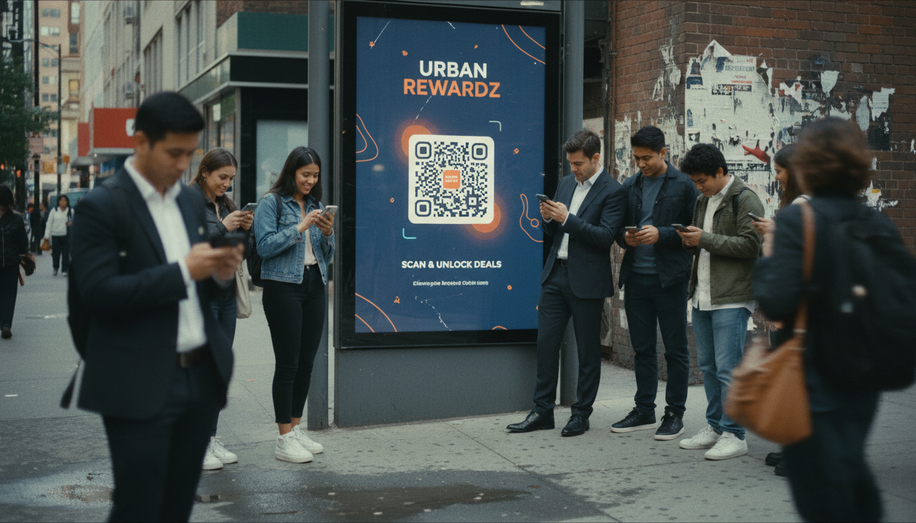

In an era where consumers navigate seamlessly between physical spaces and digital screens, out-of-home (OOH) advertising has evolved from a static medium into a dynamic catalyst for online action. By embedding calls-to-action like QR codes, short URLs, and app download prompts directly into billboards, transit ads, and digital displays, brands are bridging the gap between roadside exposure and measurable digital behaviors, driving website traffic spikes and application installs with unprecedented precision.
This transformation hinges on integration. Traditional OOH excels at mass awareness, capturing eyes in high-traffic environments where digital ads alone might fade into algorithmic noise. When paired with digital strategies, it becomes a trigger for immediate response. QR codes, for instance, turn passive passersby into active participants: a commuter scans a billboard en route to work, landing on a tailored landing page offering exclusive deals or app previews. Nike’s 2019 Amsterdam campaign exemplified this, deploying augmented reality (AR) on outdoor ads that let users “shop” virtual sneakers via smartphone, blending physical intrigue with digital conversion and sparking viral buzz. Similarly, Coca-Cola’s personalized billboards used digital printing to display individual names, prompting social shares and website visits that amplified reach exponentially.
Geo-targeting supercharges these efforts. Brands now synchronize OOH placements with mobile geo-fencing, delivering reinforcing digital ads to users within proximity of a billboard. A driver spotting a transit ad for a food delivery app might receive a push notification moments later with a location-specific discount code, converting ambient awareness into an app download. This contextual layering boosts recall by up to 70% in integrated campaigns, as the physical ad primes the audience for the digital follow-up. Programmatic digital OOH (DOOH) takes it further, enabling real-time tweaks—weather-triggered messages on screens near bus stops or event-tied content that prompts hashtag-driven social engagement, funneling traffic to microsites or app stores.
Creative design is crucial for prompting action. OOH demands bold, minimal visuals optimized for motion and brief glances: large, scannable QR codes paired with urgent phrases like “Scan for 20% Off—Download Now.” These avoid information overload, directing users to digital extensions where deeper storytelling unfolds via video, interactive quizzes, or personalized offers. Static OOH builds long-term presence for brand storytelling, while digital channels handle agile CTAs, ensuring continuity without fatigue. Hashtags and custom URLs further extend lifespan, as user-generated content from Instagram shares of striking billboards generates secondary traffic waves.
Measurement has demystified OOH’s digital impact. Platforms track QR scans, URL clicks, app install attribution, and search lifts tied to campaign periods, revealing correlations like website traffic surges near ad locations. Brands analyze cross-channel data to refine targeting, attributing conversions not just to digital touchpoints but to the OOH spark that ignited them. Retargeting seals the loop: those who scan but don’t convert encounter tailored online ads, nudging them toward completion.
Yet success demands alignment. Synchronize timing—launch OOH ahead of digital bursts to prime awareness—while matching audience profiles and messaging across channels. Location relevance is non-negotiable: place ads in demographic hotspots, then mirror with online targeting to avoid mismatches. Common pitfalls, like siloed planning or cluttered creatives, dilute results; instead, sequential storytelling prevails, with OOH introducing the hook and digital delivering the payoff.
Real-world wins underscore the potential. Food brands use transit wraps with app prompts during rush hour, correlating scans to install upticks. Retailers deploy DOOH near malls, geo-triggering offers that drive e-commerce visits. In 2025 strategies, personalized location-based experiences via geo-targeted OOH paired with social integration have proven resilient, even amid privacy shifts, by emphasizing opt-in interactions like branded hashtags. As programmatic DOOH matures into 2026, proximity and point-of-interest targeting will refine this further, placing screens where audiences linger and act.
Ultimately, OOH’s role as a digital catalyst redefines ROI in fragmented media landscapes. It doesn’t compete with online channels; it ignites them, turning everyday exposures into quantifiable journeys from street to screen. For marketers, the imperative is clear: harness OOH not as a relic, but as the unskippable spark that propels consumers into app ecosystems and websites, yielding conversions that digital alone struggles to scale.