
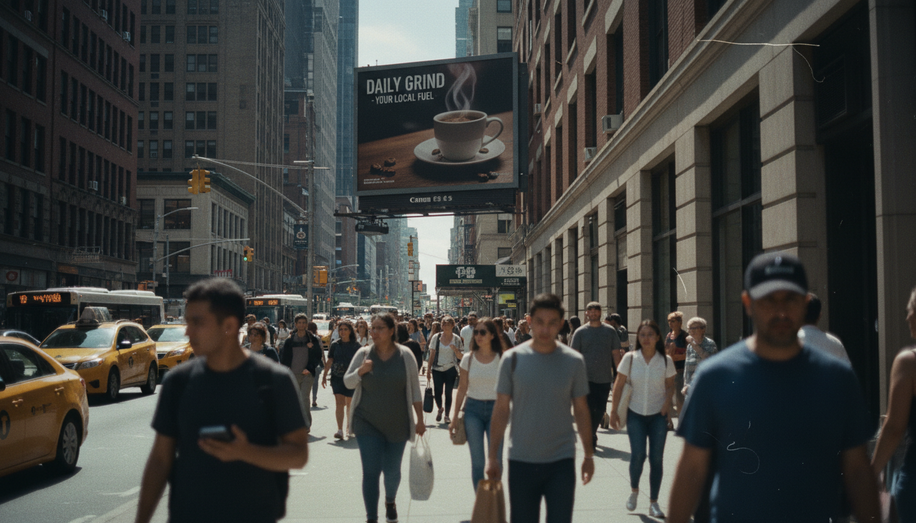

Small business owners often dismiss out-of-home advertising as a luxury reserved for Fortune 500 companies with bottomless marketing budgets. This misconception couldn’t be further from the truth. In 2026, OOH advertising has become more accessible and cost-effective than ever, offering Main Street businesses a powerful way to reach their communities without breaking the bank. By understanding the fundamentals and adopting strategic approaches, local entrepreneurs can harness outdoor advertising to build brand visibility and drive foot traffic.
The affordability argument is stronger now than it has been in years. Outdoor signage costs significantly less than traditional television advertising, making it a genuinely accessible option for businesses operating on tight margins. For small businesses, banners and flags represent some of the most flexible and cost-effective sign options available. These materials are easy to set up, highly visible, and perfectly suited for promoting time-sensitive messages like seasonal sales, grand openings, or special events. A cafe owner on Main Street might invest in a simple A-frame sidewalk sign paired with window posters, reaching nearby customers at the exact moment they’re deciding where to spend their money.
What separates successful small business OOH campaigns from forgettable ones is strategic placement and design discipline. The fundamental rule remains unchanged: simplicity wins. Business owners have only seconds to capture attention, so cluttered designs dilute impact. The most effective outdoor ads pair short, clear messaging with striking visuals. A local steakhouse shouldn’t advertise near a vegan restaurant; instead, entrepreneurs should choose locations where their target audience naturally congregates—near public transit hubs, popular landmarks, or neighborhood gathering spots where potential customers are already moving through the area.
Technology has democratized OOH in ways that benefit small businesses considerably. Dynamic digital screens, once prohibitively expensive, now offer flexible short-term placements for local operators. Additionally, the rise of dynamic creative technology allows businesses to automatically adapt ad content based on real-time data inputs like weather and time of day. A coffee shop could promote hot beverages on cold mornings and iced drinks during afternoon heat waves—all managed through automated systems. This level of personalization drives engagement without requiring creative genius from business owners.
Beyond basic design and placement, measurement has become more accessible. Modern OOH practitioners track effectiveness through Daily Effective Circulation metrics, mobile data tracking, and foot traffic analysis. Smart business owners integrate QR codes into their outdoor signage, linking physical advertisements to digital touchpoints like websites, sign-up forms, or product pages. By tracking QR scans and monitoring landing page visits, entrepreneurs gain concrete data about which campaigns convert browsers into customers. This bridge between physical and digital worlds transforms outdoor advertising from a shot in the dark into a measurable investment.
The most successful small business OOH strategies balance timing and budget allocation carefully. Rather than spreading limited resources across multiple locations, effective campaigns often dominate fewer, strategic areas. A landscaping company launching services in a specific neighborhood might concentrate billboard and transit advertising in that zone rather than dispersing their budget across town. This focused approach creates frequency and reinforces the brand message in the minds of the exact audience most likely to hire them.
Seasonal variations and local events deserve consideration when planning campaigns. A retail business might schedule heavy outdoor advertising around holiday shopping seasons, while a landscaping service concentrates efforts during spring and early summer. Similarly, coordinating OOH with other marketing channels amplifies results. Using outdoor advertising to support social media campaigns or coordinating with local radio for drive-time impact creates synergy across marketing platforms. Research indicates that long-term integrated strategies deliver 42 to 76 percent higher ROI depending on the industry category.
The barrier to entry for small business OOH advertising has never been lower. Local heroes running neighborhood cafes, family landscaping operations, and independent retailers no longer need massive budgets to access the medium. With strategic placement, clean design, smart use of technology, and integrated measurement, Main Street businesses can leverage outdoor advertising to build community presence and drive sustainable growth in 2026.