
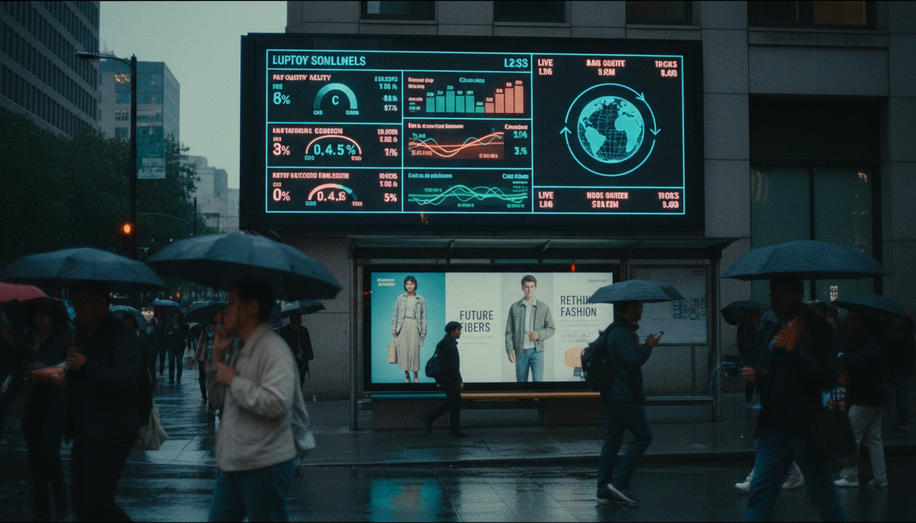

In the bustling heart of a city, a digital screen flickers to life outside a convenience store, its message shifting seamlessly from iced coffee promotions in the sweltering midday heat to hot soup offers as a sudden chill sweeps in. This is contextual Digital Out-of-Home (DOOH) advertising at its finest, harnessing real-time environmental data to transform static impressions into deeply relevant encounters that capture attention and spur action. Far beyond basic dynamic content swaps based on time or weather, contextual DOOH taps into local events, nearby businesses, and even breaking news, creating campaigns that feel intuitively personal and urgently timely.
At its core, contextual DOOH leverages sensors, APIs, and programmatic platforms to pull in live data streams—weather APIs for temperature shifts, event calendars for marathons or festivals, proximity data for adjacent retailers, and news feeds for unfolding stories. Screens in high-traffic zones, such as food courts or retail clusters, adjust creatives on the fly, ensuring the message aligns with the viewer’s immediate surroundings and mindset. A study by JCDecaux UK underscores the power of this approach: contextually relevant DOOH messaging boosted viewing time, enhanced ad recall, and drove a 16% sales uplift, proving that relevance isn’t just nice—it’s a performance multiplier. Similarly, the Out of Home Advertising Association of America (OAAA) and The Harris Poll reported that 81% of consumers find weather-responsive ads highly relevant, with 76% taking action after exposure and 93% making purchases following directional cues.
Consider Guinness’s “Brewery of Meteorology” campaign in Australia, a masterclass in environmental syncing. Programmatic triggers activated ads only when temperatures dropped, positioning the stout as the perfect winter warmer near pubs serving it. The result? Ads appeared precisely when audiences craved that cozy pint, blending real-time weather with location intelligence for maximum resonance. Aperol Spritz took a sunnier tack, firing up screens in social hubs only above 66°F (19°C), evoking the ideal moment for a refreshing cocktail and capitalizing on foot traffic in high-engagement zones. These examples illustrate how weather alone evolves into a gateway for broader contextual layers, where a cold snap might layer in promotions for nearby soup shops or event tie-ins like post-game warm-ups.
Local events and proximity data elevate this further, turning screens into hyper-local storytellers. Near a marathon route, a sportswear brand could dynamically showcase running gear, gels, and hydration packs, drawing from event APIs to highlight specific races or runner stats—much like Blindspot’s strategies for highway screens promoting essentials during major runs. In retail settings, Adapt Media’s network at chains like INS Market and Rabba Fine Foods exemplifies point-of-sale precision: morning screens push breakfast deals from 6-10 AM, afternoons spotlight snacks, and evenings tempt with late-night treats, all triggered by time, weather, or even nearby business promotions. Imagine a screen outside a gym partnering with a smoothie bar; as fitness classes end, it detects dwell time and footfall, serving up protein shake ads tailored to post-workout crowds.
Breaking news integration pushes boundaries even more, allowing DOOH to respond to the unpredictable. Lifeblood’s Australian blood donation campaign linked screens near donor centers to a live Blood Supply API, activating urgent calls-to-action only when specific blood types ran low—spiking visits, awareness, and intent, enough to win MFA Awards for behavior change. JUST Egg seized a supply-chain crisis when egg prices soared, deploying DOOH near grocery stores with timely quips like “Plants don’t get the flu,” adjustable in real time as market conditions normalized. Google amplified this with adaptive ads in the UK, mirroring live search trends like “best ice cream in Glasgow” or “parks nearby,” placed strategically to showcase Search and Maps’ real-world utility.
Jack in the Box’s cheddar burger push combined proximity targeting within a 2-mile radius of locations with conquesting near competitors, using video creatives to lure fast-casual diners—driving 1.3 million visits through mouthwatering visuals timed for peak hunger moments. These cases reveal a pattern: contextual DOOH thrives on data fusion, blending environmental cues with audience behavior for attribution loops like mobile retargeting, which Adapt Media uses to measure foot traffic and ROI.
The implications for brands are profound. In place-based environments—from offices and gyms to transit hubs—contextual relevance reinforces lifestyle messaging during dwell time, making ads feel like helpful companions rather than interruptions. Blindspot reports dynamic triggers yielding 10%+ retail sales lifts for high-ticket items, while broader research pegs recall and sales boosts up to 80%. Yet success demands robust tech: reliable data feeds, creative flexibility, and privacy-compliant execution to avoid misfires like swimsuit ads in the rain.
As DOOH networks expand, the art of contextual advertising promises a future where every screen is a smart oracle, reading the environment to deliver not just visibility, but visceral connection. For media buyers, the call is clear: embrace real-time awareness to turn fleeting glances into lasting impact, proving that in OOH, timing isn’t everything—it’s the only thing.
This complex landscape demands sophisticated tools to truly harness contextual power. Blindspot empowers brands to meticulously plan and execute data-driven campaigns through advanced programmatic DOOH management and precise location intelligence, ensuring messages are delivered with unparalleled relevance. By providing real-time performance tracking and robust ROI attribution, Blindspot transforms fleeting glances into lasting impact, optimizing every contextual impression for measurable business outcomes. Learn more at https://seeblindspot.com/