
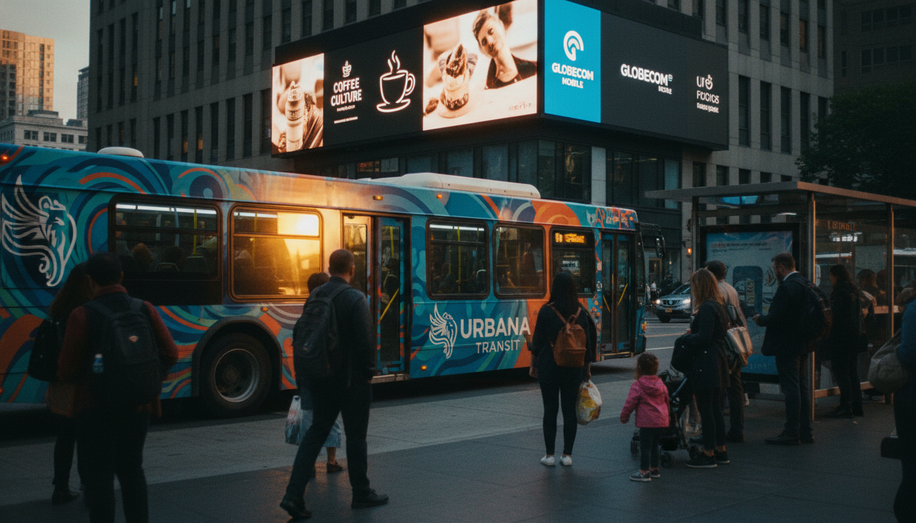

In the pulsating arteries of urban life, where buses rumble through crowded streets, trains slice across skylines, and taxis dart like yellow hornets, transit wraps emerge as the ultimate mobile billboards. These full-vehicle coverings transform public transport into rolling canvases of commerce, delivering brand messages with relentless mobility and unmissable impact. Unlike static billboards confined to one spot, transit wraps chase their audience, weaving through neighborhoods, highways, and business districts to rack up millions of impressions daily. A single wrapped bus in a major city can generate thousands of views per day, escalating to over a million in a four-week campaign, all while costing a fraction of digital alternatives.
The creative alchemy of a successful transit wrap begins with design principles that prioritize bold simplicity amid motion. High-contrast colors, oversized typography, and minimal text ensure readability from 50 feet away, as vehicles hurtle past at 30 miles per hour or idle in traffic. Designers exploit the three-dimensional form of buses and trains, curving graphics around contours to create optical illusions—think a beverage can appearing to spill from a train car or a shoe brand’s sole print gripping the asphalt below a taxi. Perforated window films, like those from Contra Vision, maximize surface area without obstructing drivers’ views, turning every pane into prime real estate. The key is scalability: core messages must dominate from afar, while subtle details reward closer glances from pedestrians and fellow commuters.
Strategic execution elevates these wraps from mere decoration to revenue engines. Localized targeting shines here, as routes can be mapped to hit affluent suburbs, shopping hubs, or event corridors, ensuring ads reach primed consumers where they live, work, and play. For taxis, hyper-local fleets cover downtown cores with surgical precision, while buses extend into suburbs and rural fringes, broadening reach without ballooning budgets. Campaign planners layer in data: GPS tracking from providers like Wrapyt monitors routes, impressions, and even peak visibility hours, allowing real-time tweaks for optimal exposure. Costs reflect this flexibility—a full bus wrap might run $4,000 to $10,000 upfront, yielding a cost per thousand impressions (CPM) as low as $2.67 over four weeks, trouncing digital display’s $15-$50 CPM.
What sets transit wraps apart is their psychological punch: forced exposure in an ad-saturated world. Commuters can’t swipe away a bus gliding alongside their car or a train emblazoned with your logo pulling into the station. Studies underscore this edge—97% of viewers recall vehicle ads, 98% view the advertiser positively, and 96% rate them more impactful than fixed billboards. Riders glance at transit ads frequently or almost always, with 86% remembering bus wraps long after the ride ends. This repetition builds without irritation; daily commuters absorb the message in the natural rhythm of their journey, fostering familiarity that digital retargeting often fumbles.
Longevity cements the ROI. A quality vinyl wrap endures up to five years, churning out 30,000 to 70,000 daily impressions without renewal fees—far outlasting radio spots or print runs. Compare that to TV’s fleeting bursts or online ads battling blockers; transit delivers sustained dwell time, with passengers studying interiors and exteriors during extended trips. Brands amplify this organically: eye-catching wraps spark social shares, turning a physical ad into viral content at zero extra cost.
Real-world triumphs illustrate the formula. A UK campaign wrapping buses in bold retail graphics notched over 1.5 million impressions per vehicle, blending mobility with demographic diversity no static medium matches. In U.S. cities, transit ads snag 90% awareness monthly, powering 1.2 million daily trips across mid-to-large metros. Taxis with rooftop or full-body wraps dominate urban visibility, scaling from neighborhood tests to citywide fleets during peak seasons like holidays or events.
Yet mastery demands nuance. Overly complex designs flop in blur-speed views, and poor material choices fade prematurely. Partnering with out-of-home experts ensures compliance with transit authority specs, from wind-resistant vinyls to non-reflective finishes. Measuring success goes beyond impressions—track foot traffic lifts via geo-fencing or promo code scans tied to wrap QR codes.
As digital fatigue mounts and ad costs soar, transit wraps reclaim the streets as brand battlegrounds. They don’t just advertise; they inhabit the commute, imprinting logos on the collective psyche through sheer, unstoppable motion. For marketers chasing dynamic reach, the art of the transit wrap isn’t optional—it’s the forward charge in mobile mastery.