
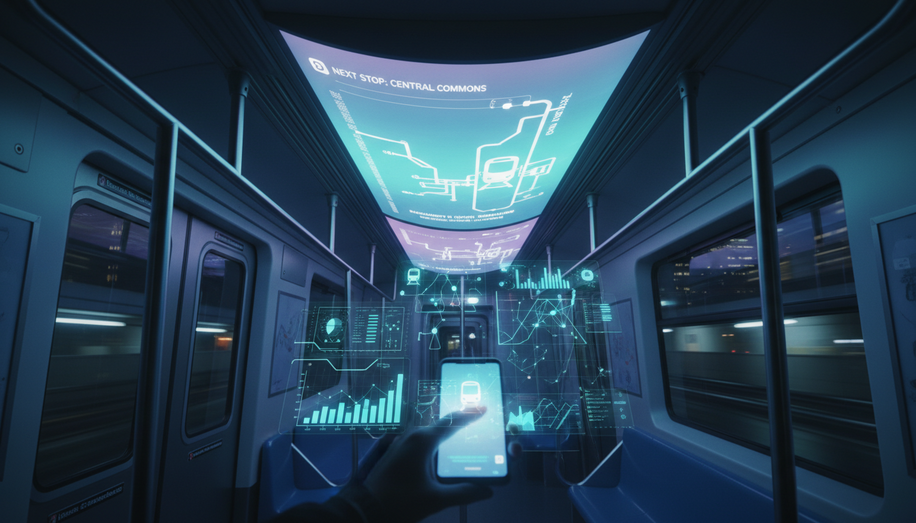

In the bustling arteries of urban life, where commuters weave through buses, trams, and subways, transit advertising has evolved from mere visual backdrop to a powerhouse of measurable business growth. Far beyond racking up impressions, formats like bus wraps, interior cards, and station takeovers deliver tangible returns through heightened brand recall, foot traffic spikes, and direct sales lifts, as evidenced by campaigns worldwide.
Bus wraps, those full-vehicle exteriors that transform ordinary transit into rolling billboards, command attention across expansive routes, embedding brands into daily commutes. A retail brand in Dubai harnessed city-wide bus wraps for three months, achieving a 25% surge in store footfall through localized messaging and clear calls-to-action like website URLs and contact details. This isn’t serendipity; the high-frequency exposure—buses traversing the same paths multiple times daily—boosts brand recall by over 30%, turning passive riders into engaged customers who act post-journey. Advertisers track this via geo-targeted digital spikes: consumers exposed to wraps show 46% higher likelihood of Googling the brand afterward, funneling top-of-funnel awareness into assisted conversions like online purchases or visits. In Abu Dhabi, Aldar Properties’ bus campaign promoting a residential development drove direct inquiries and sales leads, proving wraps’ ROI in high-stakes real estate by dominating geographic sightlines and reinforcing community relevance.
Complementing exteriors, interior cards—those compact posters affixed above seats or along tram and subway walls—capitalize on captive audiences with prolonged, close-up views. Riders, averaging 20-30 minutes per trip, absorb messaging repeatedly, fostering familiarity without escape. Mentos’ 2007 Cincinnati campaign paired bus wraps with interior ads, yielding a 62% jump in unaided brand awareness and 32% ad recall, even among those already 93% familiar with the candy. This repetition translates to revenue: studies link such exposure to sustained purchase intent, with commuters 30% more likely to engage local brands after repeated sightings. For niche players, like a beef jerky outfit targeting financial districts, interior cards on peak-hour routes near gyms and offices optimize spend by pinpointing demographics, yielding sales lifts measurable through post-campaign audits and feedback tools tracking uplift in store traffic or app downloads. Cost-effectiveness shines here; with CPMs as low as $2.18 per thousand impressions for transit formats, interiors stretch budgets while delivering 16% year-over-year ridership growth to amplify reach.
Station takeovers, the immersive dominators of platforms and concourses, eclipse single ads by commandeering entire environments—walls, floors, digital screens—for unforgettable impact. Prestige Flowers in the UK scanned nearly 8,000 QR codes from QR-only posters in transit hubs, pulling digitally savvy shoppers into their online funnel and sparking buzz without traditional creative overload. Netflix has similarly buzzed launches via takeovers, correlating spikes in trailer views and social mentions to event-driven ROI. These setups excel in direct response: high-traffic choke points ensure mass exposure during dwell times, with metrics like QR scans, NFC taps, or branded hashtag volumes providing quick feedback loops. A local beverage brand’s six-month bus stop takeover (a takeover variant) tracked long-term metrics, revealing persistent brand awareness and sales growth quarters later. Integrated with digital channels, takeovers amplify synergy—OOH prompts searches that close sales—elevating overall campaign ROI.
What binds these formats is data-driven optimization, moving beyond impressions to outcomes like revenue correlation and resource efficiency. High-frequency routes yield repeated dosing, enhancing recall and trust among urban professionals and locals. Advertisers audit routes via transit data for peak targeting, A/B test creatives, and layer in polls for commuter insights, reallocating budgets from laggards to stars. Cross-channel alignment—pairing transit with social or search—fortifies recall, as consistent messaging across touchpoints compounds lifts in footfall, web traffic, and conversions. Even amid regulatory hurdles for finance-tied brands, compliance-embedded campaigns ensure risk-free scaling.
Transit ridership’s rebound to 80% of pre-pandemic levels, with 7.1 billion U.S. trips in 2023, underscores the medium’s vitality amid stagnant office returns. Yet success demands precision: geographic tailoring for neighborhood resonance, multilingual creatives for diversity, and timing for commuter peaks. Brands ignoring this waste on broad blasts; winners like those in Dubai or Cincinnati prove targeted transit drives real results—25% footfall gains, 62% awareness surges, thousands of scans—proving ROI resides in action, not airtime.
For OOH strategists, transit isn’t visibility vanity; it’s a ROI engine. Bus wraps conquer streets, interiors own minds, takeovers seize moments—each propelling businesses from awareness to wallets, one ride at a time.