
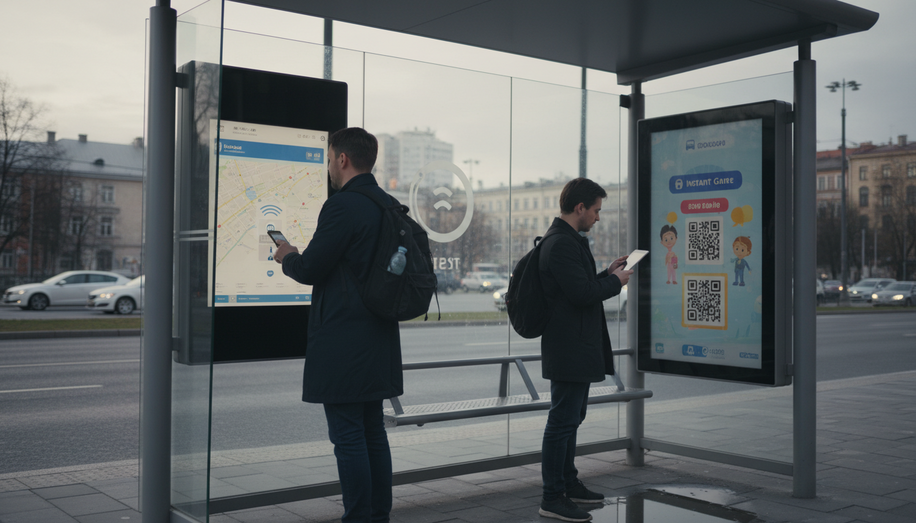

In the bustling streets of modern cities, where pedestrians scroll endlessly on their phones, out-of-home (OOH) advertising is evolving from static billboards into dynamic portals of interaction. Brands are harnessing QR codes, near-field communication (NFC) tags, and gamification to pull audiences into participatory experiences, driving immediate mobile actions like app downloads, purchases, and social shares that extend campaigns far beyond the physical space.
QR codes, those ubiquitous square patterns, have become a cornerstone of this shift, bridging the gap between the physical ad and a brand’s digital ecosystem with effortless precision. A simple scan with a smartphone unlocks exclusive content, discounts, or personalized offers, transforming a fleeting glance into measurable engagement. In high-traffic zones like transit hubs and retail districts, where urbanization has amplified consumer mobility, these codes boost dwell time by encouraging pauses for interaction—industry data indicates interactive OOH formats can increase this by 20 to 40 percent. Consider a coffee chain’s campaign on urban bus shelters: passersby scan a QR code to access a location-specific coupon, instantly redeeming it via mobile wallet while geo-fencing technology retargets them for future visits. This seamless integration with mobile platforms not only generates user-generated content for social amplification but also provides brands with valuable data on audience behavior, refining future targeting.
NFC technology takes interactivity a step further, offering touchless connectivity that feels futuristic yet accessible. By tapping a phone near an NFC-enabled poster or kiosk, consumers bypass scanning altogether, instantly connecting to apps, videos, or loyalty programs. This proximity-based tech thrives in experiential settings, such as pop-up installations or smart city infrastructure, where IoT sensors detect foot traffic and trigger tailored responses. For instance, fashion brands have embedded NFC in mall displays, allowing shoppers to tap for virtual try-ons or instant purchases, blending physical presence with e-commerce frictionlessly. As smart cities expand in 2026, NFC’s role in context-aware messaging—adapting to time, weather, or events—positions it as a key enabler for hyper-local campaigns, fostering deeper brand relationships without demanding prolonged attention.
Gamification elevates these tools into playful narratives, turning passive viewers into active participants. By layering challenges, contests, or rewards onto QR and NFC activations, brands create immersive stories that linger in memory. Imagine a sneaker brand’s guerrilla campaign on city walls: a QR code launches a mobile game where users collect virtual tokens by visiting mapped OOH sites, unlocking prizes via NFC check-ins. This not only extends engagement across multiple touchpoints but also sparks organic sharing—studies show such tactics can boost brand recall by up to 30 percent through viral moments. Gamified elements like selfie challenges or AR-enhanced hunts encourage social media posts, amplifying reach exponentially. In retail zones, touch-enabled kiosks host instant quizzes with NFC rewards, driving foot traffic and conversions while collecting first-party data ethically.
These technologies shine brightest when combined, as seen in integrated campaigns that leverage programmatic digital out-of-home (DOOH) for real-time adaptability. A billboard might display dynamic QR codes that change based on audience demographics or traffic data, while NFC panels invite deeper dives into gamified content. Fast-food giants have pioneered this with AR-free alternatives: scanning a QR on a drive-thru banner enters a spin-the-wheel game for free items, redeemable via app. The result? Higher redemption rates and trackable ROI, as 26 percent of consumers visit brand sites post-OOH exposure. Sustainability adds another layer, with energy-efficient LED displays hosting these features, appealing to eco-conscious audiences who value purposeful innovation.
Yet, the true power lies in emotional resonance. Unlike digital ads battling ad fatigue, interactive OOH capitalizes on real-world serendipity—71 percent of people notice roadside messages, and funny or clever activations spark discussions. By ditching overrelied AR for simpler QR, NFC, and games, brands democratize engagement, requiring no downloads or high-end devices. This inclusivity extends to multilingual codes and audio NFC cues, ensuring broad accessibility.
Looking ahead, as OOH spend surges with DOOH projected at over 40 percent of the market, these tools will integrate deeper into smart urban fabrics. AI optimization will personalize gamified prompts in real time, while beacons retarget interactors across channels. Brands ignoring this interactivity risk fading into the urban noise; those embracing it craft experiences that don’t just capture eyes but compel action, proving OOH’s enduring relevance in a connected world.