
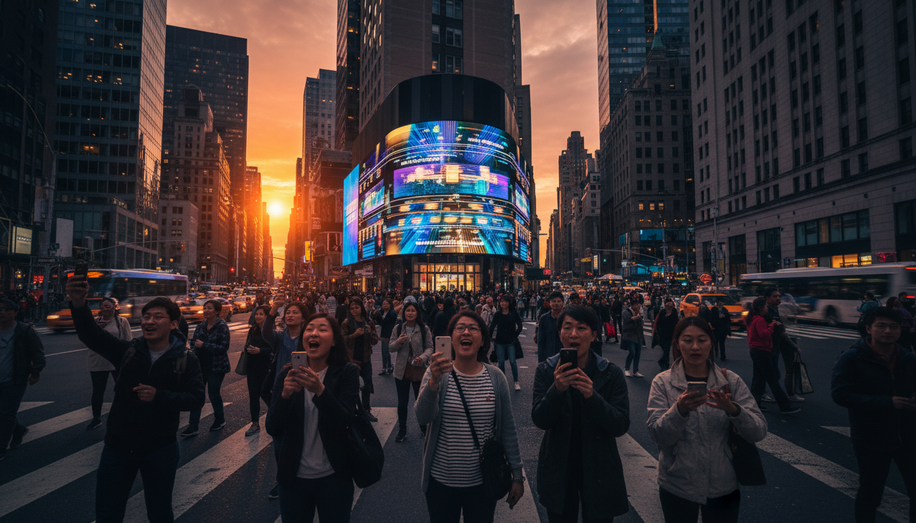

Out-of-home advertising has long been dismissed as a relic of the pre-digital era, yet the most compelling marketing breakthroughs of recent years reveal something unexpected: physical spaces remain among the most powerful catalysts for conversation. While digital channels dominate media budgets, innovative OOH campaigns are proving that the intersection of physical visibility and shareable moments creates word-of-mouth momentum that algorithms alone cannot generate.
The fundamental truth behind this shift is straightforward. According to Nielsen research, 92 percent of consumers trust recommendations from friends and family over any other type of advertising. Traditional OOH formats like billboards and transit ads excel at creating the initial spark—the memorable visual that lodges itself in the collective consciousness and becomes worth discussing. But modern OOH campaigns go deeper, deliberately engineering experiences designed to transform passive viewers into active brand advocates.
Consider the mechanics of how this works. When outdoor advertising occupies high-traffic areas—highway corridors, transit hubs, shopping districts—it creates consistent visibility that builds mental familiarity. That familiarity is the prerequisite for conversation. A striking billboard doesn’t just register; it becomes a reference point in everyday dialogue. The image seen during a commute becomes a talking point at dinner. The phrase glimpsed at a bus shelter gets repeated to a friend. This progression from visibility to discussion to recommendation represents word-of-mouth in its most organic form.
What separates merely visible campaigns from truly viral ones is intentional design. Successful OOH campaigns now incorporate specific mechanisms that invite participation and sharing. QR codes that lead to exclusive content, augmented reality experiences that transform static billboards into interactive moments, memorable hashtags displayed prominently alongside visuals—these elements bridge the physical and digital worlds, giving consumers tangible reasons to engage beyond passive viewing.
The mechanics extend further into community connection. When outdoor advertising targets specific neighborhoods and local contexts, it creates familiarity that strengthens referral efforts. A retailer’s digital billboard showcasing user-generated content from local customers doesn’t just advertise products; it validates community participation and encourages others to contribute their own stories. A fitness studio’s transit ads featuring testimonials from recognizable community members transform marketing into social proof that carries weight precisely because it’s hyperlocal.
Recent examples underscore this potential. One restaurant chain leveraged billboards to promote a referral rewards program, pairing their slogan with a QR code that led directly to enrollment opportunities. The campaign generated not just foot traffic but sustained social media conversation as customers shared their experiences. A fitness studio took this further, featuring member testimonials on transit ads alongside a branded hashtag, effectively turning commuters into potential advocates who saw peers—not celebrities—endorsing the brand.
The psychology underlying these campaigns recognizes a crucial insight: people discuss experiences, not just products. Outdoor advertising that creates memorable moments becomes discussable. It generates the kind of organic buzz that paid social media promotion struggles to achieve. When someone encounters a clever billboard, a striking mural, or an unexpectedly engaging outdoor installation, they have an instinctive urge to share that moment, whether by mentioning it to someone nearby or posting about it online.
This dual-channel amplification explains why OOH remains relevant in 2026. The medium reaches people in moments of transition—during commutes, while shopping, when navigating urban spaces—precisely when they’re thinking about the world around them. Paired with digital integration points and designed specifically to spark conversation, OOH advertising becomes the physical anchor for word-of-mouth campaigns that extend across channels and communities.
The future of word-of-mouth marketing isn’t about choosing between traditional and digital approaches. Instead, the most effective campaigns recognize that outdoor advertising creates the real-world visibility and memorable moments that make people want to talk, share, and recommend. In an attention economy increasingly fragmented across screens, the simple power of a well-executed outdoor campaign to create shared cultural moments may be more valuable than ever.