
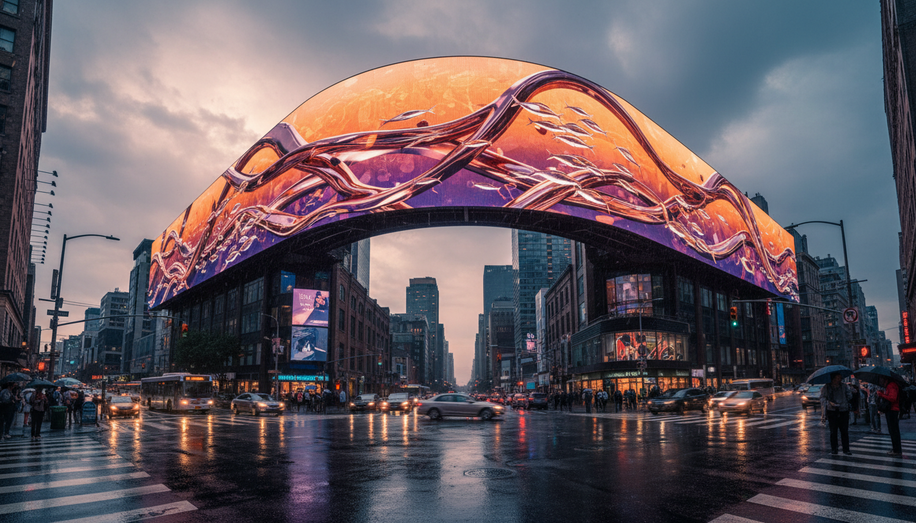

In the bustling arteries of modern cities, digital billboards are shedding their static skins, evolving into vibrant, responsive canvases that captivate passersby with unprecedented precision and flair. Advancements in screen technology, soaring resolutions, and dynamic content capabilities are redefining out-of-home (OOH) advertising, transforming roadside spectacles into immersive experiences that blend seamlessly with the urban environment. No longer mere message boards, these next-gen displays leverage AI, micro-LED innovations, and real-time data to deliver personalized narratives, ensuring brands cut through the noise of daily commutes and crowded streets.
At the heart of this revolution lies a leap in display hardware. Micro-LED and high-brightness OLED panels are dominating 2026 installations, offering resolutions that rival indoor screens while thriving in harsh outdoor conditions. Smaller pixel pitches—now dipping below 1mm in premium models—enable razor-sharp text, intricate graphics, and fluid motion visible even from close range, a boon for high-traffic retail zones and urban billboards alike. These screens boast superior brightness levels, exceeding 10,000 nits, which pierce direct sunlight without washing out, and they endure longer with less maintenance than legacy LCDs or older LEDs. Energy efficiency has surged too, with modular designs allowing operators to scale displays precisely to fit any space, from towering highway behemoths to sleek building facades. Transparent LED overlays, for instance, superimpose dynamic promotions onto glass storefronts, merging digital allure with physical architecture in ways that static vinyl never could.
Dynamic content capabilities are the true game-changer, propelled by AI algorithms that turn billboards into intelligent conversationalists. Gone are the days of looped ads; today’s systems analyze real-time data from IoT sensors, cameras, and weather feeds to adapt messaging on the fly. A billboard might shift from a sunny beach promo to rain gear suggestions as clouds gather, or tailor fashion ads to the demographics of passing crowds detected via anonymized analytics. Programmatic platforms automate this further, enabling advertisers to bid for slots, optimize campaigns based on traffic flow or local events, and measure ROI with granular precision—lowering barriers for small brands while boosting engagement for all. In Cape Town’s vibrant Bree and Long Streets, recent large-format installs exemplify this, powering premium locations with solar-backed resilience that sustains 24/7 brilliance without grid strain.
Immersive elements elevate these displays beyond visibility to visceral impact. Holographic projections and 3D visuals create floating illusions that draw eyes from multiple angles, while gesture-controlled interfaces invite interaction sans touch—perfect for health-conscious post-pandemic eras. Cloud-based management orchestrates it all, letting operators push updates across global networks from a single dashboard, syncing content with indoor extensions like lobby LED walls that replace outdated TVs. This convergence fosters “total ecosystems,” where outdoor billboards link with audio cues, mobile triggers, and even AR apps, crafting journeys that extend from street to screen.
Sustainability underpins the push, as operators integrate solar power to meet up to 50% of energy needs, slashing costs and uptime risks in grid-stressed locales. LED democratization—thanks to plummeting prices—democratizes access, empowering mid-tier businesses to deploy pro-grade setups previously reserved for giants. The digital OOH market, projected to swell from $21.62 billion in 2025 to $24.24 billion in 2026, underscores the momentum, driven by these innovations that prioritize relevance over repetition.
Yet challenges persist. Data privacy concerns shadow AI personalization, demanding robust anonymization to maintain trust. Creative fatigue looms too, as Shawn Spooner, global CTO at Billups, warns: after years of data obsession, 2026 heralds a “creative renaissance” where storytelling regains primacy amid tech prowess. Networks must balance automation with artistry to avoid viewer burnout.
As these evolving canvases proliferate, OOH advertising transcends interruption, becoming an ambient companion in public life. Billboards that once shouted now converse, anticipate, and inspire—painting the cityscape with possibilities that feel as alive as the crowds they serve. The traditional billboard era is over; in its place rises a dynamic frontier where technology and imagination redraw the boundaries of engagement.
Navigating this dynamic frontier, where relevance and measurable impact are paramount, demands sophisticated tools to orchestrate these evolving canvases. Platforms like Blindspot empower advertisers with real-time programmatic DOOH campaign management, precise audience measurement, and granular ROI attribution, enabling campaigns to blend artistic storytelling with data-driven optimization. This ensures dynamic content not only captivates passersby but also delivers demonstrable value in an increasingly complex urban landscape. Learn more at https://seeblindspot.com/