
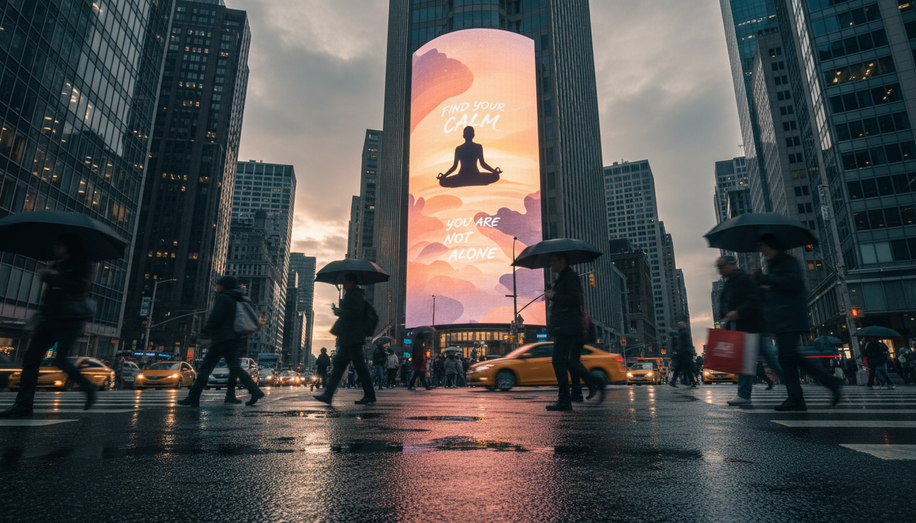

The healthcare industry has undergone a dramatic transformation in how it reaches patients and promotes critical health initiatives. Out-of-home advertising has emerged as an indispensable tool in this evolving landscape, moving far beyond traditional hospital signage to become a sophisticated, data-driven strategy that meets consumers at the moments when they are most receptive to health messaging.
Recent research reveals the power of this medium in capturing public attention. A significant increase in the number of adult consumers who have noticed OOH ads compared to previous years demonstrates the growing effectiveness of outdoor placements, with an even more impressive 58% of people taking notice of healthcare service ads specifically. This level of recall proves particularly valuable for healthcare organizations facing unprecedented challenges, including workforce shortages, online misinformation, and the lingering effects of the COVID-19 pandemic.
The strategic advantage of outdoor advertising lies in its proximity to actual points of care. As consumers increasingly seek quality and affordable healthcare beyond traditional doctor’s offices and emergency rooms, turning instead to urgent care centers and retail clinics, OOH advertising positions messages directly in these neighborhoods. A healthcare provider opening a new urgent care facility can leverage hyper-localized outdoor campaigns to inform residents in that specific community about the service’s availability, convenience, and benefits. This contextual relevance transforms outdoor advertising from passive messaging into actionable information that arrives precisely when and where consumers need it.
During critical periods such as health insurance enrollment seasons, outdoor advertising demonstrates exceptional reach capabilities. Billboards in high-traffic areas combined with transit advertising on buses, trains, and shelters ensure that commuters, pedestrians, and drivers encounter messages repeatedly throughout their daily routines. Insurance companies have capitalized on this strategy through place-based advertising in grocery stores, salons, gas stations, and shopping malls, embedding their messages into the everyday lives of potential policyholders.
Real-world case studies illustrate the tangible results achievable through thoughtful OOH strategies. One allergy medication brand leveraged digital out-of-home advertising during peak allergy season, strategically placing ads on outdoor panels in high-traffic shopping centers across major cities. By capitalizing on real-time contextual data and location intelligence, the campaign met consumers exactly where they were experiencing symptoms, directly contributing to higher engagement and increased conversions. Similarly, Esse Health, a physician network in the St. Louis area, utilized mobile targeting integrated with OOH placements to build awareness of a new physician joining their practice, achieving a click-through rate 67% above benchmark and increasing the physician’s patient visits to four per week.
Integrated campaigns demonstrate even greater impact when combining outdoor advertising with complementary channels. Huntington Hospital developed a cross-media strategy connecting outdoor advertising, social media, digital advertising, and streaming radio, allowing the hospital to time messaging for specific service lines to seasons and neighborhoods where demand was highest. Kaiser Permanente executed an omnichannel approach during enrollment periods, seamlessly integrating TV commercials, digital ads, direct mail, and mobile targeting, resulting in record-high enrollment rates. Such integration ensures consistent messaging while reaching audiences through their preferred touchpoints.
Innovation continues to reshape how healthcare organizations leverage outdoor advertising. Mobile billboards wrapped with healthcare messaging now drive through communities, building brand awareness in memorable yet non-intrusive ways. Digital out-of-home displays enable real-time updates and contextual relevance impossible with traditional static formats. Advanced geofencing technology allows advertisers to track campaign impact, measuring not just impressions but actual website visits and engagement.
The evolution of outdoor advertising in healthcare reflects a broader understanding that patients make healthcare decisions throughout their days, not just when visiting medical facilities. By strategically placing messages in high-traffic areas, leveraging location data, and integrating outdoor campaigns with digital strategies, healthcare organizations are moving beyond waiting rooms to meet patients where they live, work, and shop. As the healthcare landscape continues to evolve, outdoor advertising remains a powerful, measurable, and essential component of successful healthcare marketing strategies.