
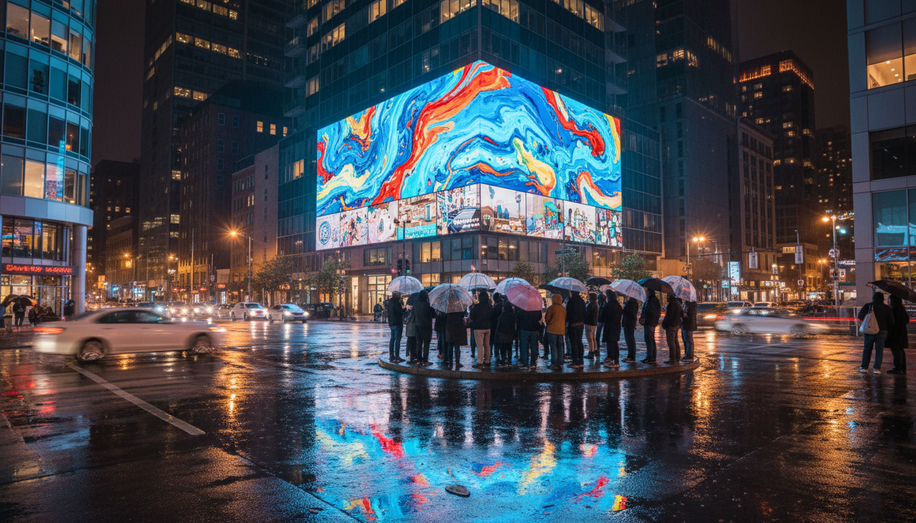

In the heart of Times Square, where neon pulses like a city’s heartbeat, a massive digital spectacular flickers to life, not with a commercial jingle, but with the roar of a live soccer match. Pedestrians halt mid-stride, clusters form on sidewalks, and strangers share cheers under the glow of a screen that transforms a billboard into a communal arena. This scene exemplifies the evolution of large-format digital out-of-home (DOOH) screens from static ad canvases to dynamic portals for public broadcasts and live event streaming, rekindling the communal spirit once dominated by broadcast television.
Once confined to printed posters and vinyl wraps, OOH advertising entered the digital era in the early 21st century, introducing full-motion video and network connectivity to displays ranging from highway billboards to urban spectaculars. These large-format screens—elevated behemoths along roadsides, skyscraper walls, or high-traffic pedestrian zones like Las Vegas strips—now boast LED technology capable of real-time updates, weather-resistant durability, and resolutions that dwarf handheld devices. What sets them apart is their scale: one ad play can reach thousands simultaneously, leveraging statistical modeling for impressions that multiply in public spaces. No longer mere billboards, they command attention in ways unskippable ads on phones or TVs cannot, with studies showing 73% consumer favorability for DOOH versus lower rates for other media.
The pivot to live event broadcasting began as brands recognized DOOH’s potential beyond promotion—to provide tangible viewer benefits like news tickers for commuters or tourist info amid urban bustle. Today, these screens foster communal viewing by streaming major events: Super Bowls on roadside bulletins, Olympic highlights at bus stops, or concerts in city centers. In London, for instance, digital spectaculars have aired live Wimbledon matches, drawing crowds that linger longer than for ads alone, turning transit hubs into pop-up watch parties. Similarly, U.S. digital bulletins rotate live sports feeds alongside messages, blending broad-reach campaigns with real-time engagement. This mirrors connected TV (CTV) experiences but in public, where screens on gas pumps or transit platforms deliver personalized, lower-cost streams that feel like home viewing exported to the street.
Programmatic integration has supercharged this shift. With OpenRTB standards now encompassing DOOH, advertisers bid dynamically on inventory, tailoring content to geolocation, time, or events—serving sunny beer ads or rainy shelter messages without physical swaps. Private networks ensure security, while manual pre-approvals maintain ad quality for mass audiences, preventing mishaps that could jeopardize venue contracts. The result? Screens that adapt: a Times Square spectacular might cut from a product launch to a live New Year’s Eve countdown, heightening relevance and dwell time.
This communal power addresses modern isolation. In an age of fragmented streaming, where viewers watch alone on laptops, DOOH revives shared experiences. Place-based screens in malls or airports already contextualize messaging—health tips in clinics, gym routines in fitness centers—but large-format versions elevate it to spectacle. Interactive touchscreens further amplify engagement, letting crowds swipe through event replays or polls, yielding data on dwell times and preferences that refine future broadcasts. Eco-friendly LEDs reduce environmental footprints compared to vinyl, aligning public good with commerce.
Challenges persist. Variable screen sizes, from shelf labels to football-pitch sprawls, demand flexible creative; positioning affects viewability; and walled-garden networks complicate universal targeting. Yet, growth is undeniable: DOOH revenue surges, with billboards leading globally, as cities like New York and highway networks worldwide host more live streams. Brands like Nike or Coca-Cola have beamed product unveilings live, but civic uses—election results, emergency alerts—underscore broader impact, brightening nights and connecting communities.
From broadcast TV’s living rooms to DOOH’s streetscapes, the medium closes the loop. A commuter glances up from their phone to join a crowd erupting over a goal, fostering bonds in fleeting public moments. As technology blurs lines between CTV and OOH, these screens don’t just advertise—they stage life’s big screens, proving OOH’s enduring truth: the best messages benefit the viewer first. In doing so, they rebuild the public square, one live frame at a time.