
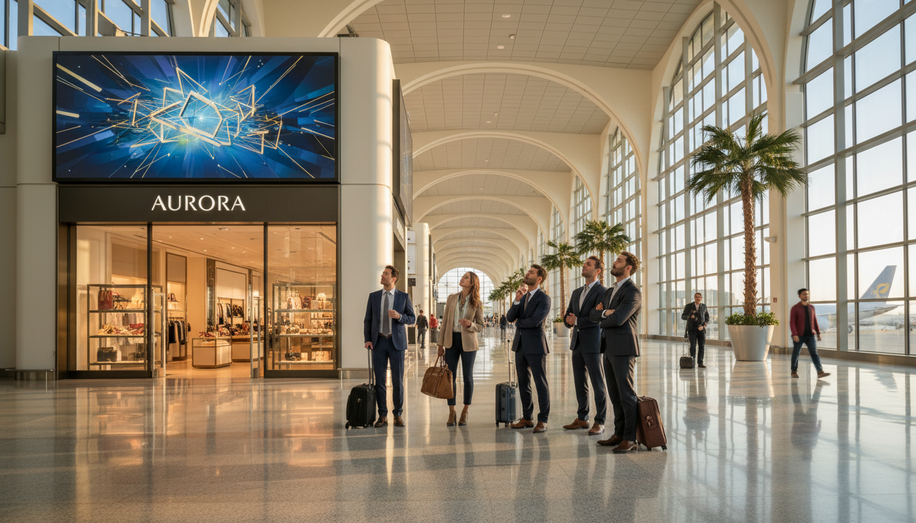

Airports have emerged as one of the most powerful and underutilized platforms in out-of-home advertising, offering brands an unparalleled opportunity to connect with affluent, international audiences during moments of extended engagement. As the global airport advertising market reaches $12 billion in 2025, the strategic imperative for brands to capitalize on this premium environment has never been clearer.
The fundamental advantage of airport advertising lies in the captive nature of its audience. Unlike traditional outdoor advertising where consumers move rapidly through spaces, airport travelers spend hours in transit, waiting for check-in, security clearance, boarding, or connections. This extended dwell time transforms passengers from fleeting viewers into engaged audiences with genuine receptiveness to brand messaging. Research demonstrates that 70% of flyers actively enjoy engaging with advertisements, exhibitions, and retail displays during their airport experience, fundamentally shifting the dynamic between advertiser and consumer.
What makes this audience particularly valuable for global brands is their demographic profile and purchasing power. Airport travelers represent a concentration of affluent, educated, and internationally mobile consumers—precisely the decision-makers that luxury and premium brands seek to reach. Business travelers and frequent flyers, who constitute a significant portion of airport traffic, demonstrate exceptional responsiveness to advertising. An impressive 83% of frequent flyers notice airport advertising, with three-quarters associating these advertisements with high-quality brands. This perception extends beyond mere awareness; 77% of flyers report taking at least one action during or after their trip as a direct result of airport advertisement exposure, indicating that dwell time translates into measurable consumer behavior.
The strategic placement and format flexibility of airport advertising amplifies its effectiveness. Digital screens now dominate 65% of airports globally, displaying real-time, personalized campaigns tailored to passenger demographics and destinations. These dynamic visuals outperform static displays in capturing traveler attention, while the airport environment itself minimizes the clutter and competition found in other media channels. High-traffic locations—from terminal concourses to jet bridges to baggage claim areas—ensure multiple exposures throughout a traveler’s journey, reinforcing brand messaging at critical touchpoints.
Beyond immediate sales impact, airport advertising delivers a prestige premium that extends brand perception far beyond the terminal. Brands advertising in airports are associated with qualities such as global reach, innovation, trustworthiness, and success. This halo effect proves particularly valuable for companies seeking to enhance their international presence or establish themselves as industry leaders. For multinational corporations and luxury brands, airport placements signal sophistication and market confidence, positively influencing how consumers perceive the brand across all markets.
The international dimension of airport advertising cannot be overstated. Airports serve as gateways to the world, attracting travelers from diverse geographies and cultures in single locations. A luxury fashion brand advertising in Paris or Tokyo reaches not only local consumers but international tourists and business travelers simultaneously, enabling brands to build recognition across multiple markets with coordinated campaigns. This global reach capability makes airports particularly attractive for brands pursuing expansion strategies or launching new products in foreign markets.
Modern airport advertising’s potency is further amplified when integrated into multi-channel marketing strategies. Digital airport displays complemented by mobile and social media campaigns create reinforcing touchpoints that strengthen brand recall and trust among international audiences. The consistency of messaging across channels, combined with the premium perception of airport environments, generates compounding effects on brand recognition and consumer consideration.
As air travel continues to recover and expand globally, airports represent increasingly valuable real estate for brands seeking to reach high-value consumers during moments of genuine receptiveness. The combination of long dwell times, affluent demographics, international reach, and minimal advertising clutter creates an advertising environment that delivers measurable engagement and conversion. For global brands committed to premium positioning and international growth, airport advertising has transitioned from optional to essential in achieving marketing objectives.