

In the shadow of gleaming digital billboards dominating urban skylines, out-of-home (OOH) advertising has long prioritized high-density city centers where commuter traffic and footfall guarantee maximum impressions. Yet as the global OOH market surges toward USD 71.2 billion by 2034, growing at a 5.50% CAGR, industry eyes are turning to overlooked frontiers: rural and suburban landscapes where traditional static formats remain potent and untapped audiences await. These less densely populated areas, often dismissed as low-yield, harbor unique potential for brands willing to adapt strategies beyond the metropolitan playbook.
Rural and suburban markets defy the urban-centric growth narrative that fuels much of OOH’s expansion. While rapid urbanization in Asia-Pacific—commanding over 34.5% of the market—drives digital innovations like interactive displays and AR campaigns in megacities, traditional billboards and transit ads thrive where digital infrastructure lags. In suburban zones ringing U.S. and European cities, or vast rural expanses in North America and emerging economies, static OOH endures due to its reliability and lower deployment costs. Mordor Intelligence notes that North America leads in revenue, but Asia-Pacific’s fastest growth stems from highway expansions and transit systems—prime rural-suburban real estate offering fresh inventory without the regulatory thicket of inner cities. Here, OOH isn’t just visible; it’s inescapable, capturing drivers on long hauls or locals in daily routines where digital alternatives like social media penetration is uneven.
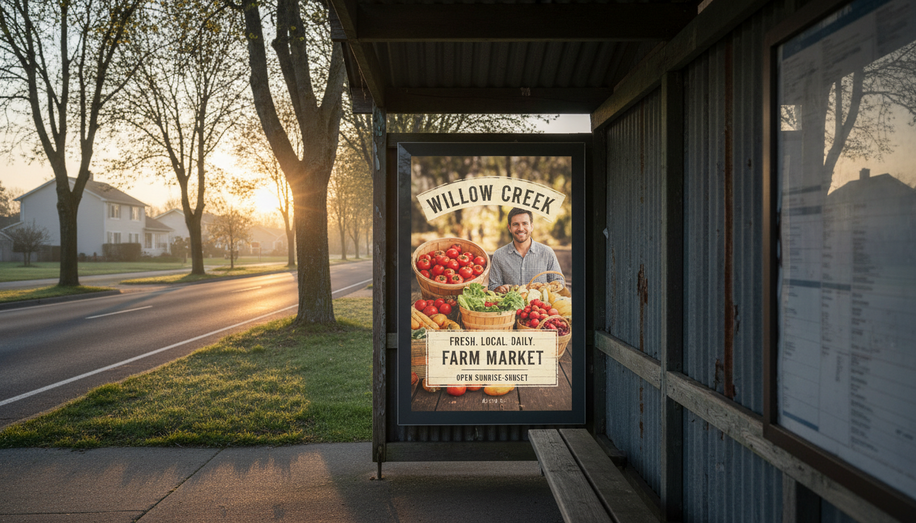
The opportunities in these territories are rooted in their demographic and behavioral distinctiveness. Suburban families, with higher disposable incomes and vehicle dependency, respond to localized messaging on roadside billboards that urban campaigns rarely tailor. Rural communities, often underserved by online ads due to spotty broadband, engage more deeply with physical media—think farmers eyeing equipment ads along county roads or small-town shoppers spotting retail promotions at transit stops. Transit advertising shines particularly bright in these areas, mirroring regional reliance on buses, trains, and even agricultural shuttles, where dwell time amplifies message retention. Cost-effectiveness seals the appeal: static formats demand far less investment than digital outlays, yielding strong ROI in markets where a single billboard might serve thousands over expansive geographies. Programmatic tools, though nascent outside cities, are creeping in via cloud-based systems that tweak content for weather or traffic—ideal for rural campaigns promoting seasonal goods like farm machinery during harvest or suburban sales during back-to-school rushes.
Challenges, however, loom large and demand savvy navigation. Sparse populations mean lower impressions per unit, stretching budgets thin unless placements are hyper-targeted—highways, fairgrounds, or community hubs become goldmines. Digital retrofitting faces hurdles: 5G rollout trails urban paces, leaving many rural billboards analog and vulnerable to weather wear, while maintenance costs escalate in remote spots. Regulatory variances add friction; suburban zoning often caps signage height or luminosity to preserve aesthetics, and rural areas grapple with land-use disputes from farmers or environmentalists pushing sustainable materials. Measurement gaps persist too—fragmented standards hinder precise attribution, though emerging GPS integration and traffic data offer hope for proving lift in store visits or brand recall. Competition from hyper-local digital like community Facebook groups further dilutes reach, compelling OOH to blend with omnichannel tactics.
Success stories illuminate proven paths forward. In the U.S. Midwest, agricultural giants like John Deere have blanketed rural highways with static billboards touting precision tech, leveraging long sightlines for storytelling that digital scrolls can’t match—campaigns yielding 20-30% sales uplifts in targeted counties, per industry benchmarks. Suburban wins abound: A major grocery chain in England’s outskirts deployed transit wraps on buses, syncing with loyalty apps for measurable foot traffic spikes, echoing retail media trends where OOH feeds omnichannel attribution. In India, where infrastructure booms create rural ad spaces, brands like FMCG leaders use highway hoardings for hyper-local Hindi campaigns, capitalizing on 86.7% regional demand spurred by road projects. These cases underscore a pivotal strategy: hybridization. Pair static OOH with QR codes linking to mobile experiences, or use AI-driven scheduling for dynamic relevance without full digitization—affordable bridges to tech-savvy suburbs.
Forward-thinking operators are doubling down. Smaller-format innovations, like street furniture in suburban strips or eco-billboards in rural eco-tourism zones, align with sustainability mandates while boosting visibility. Programmatic OOH, projected to explode alongside the USD 0.72 trillion market in 2026, enables yield optimization on existing rural assets, converting static into smart without new builds. Data analytics, fusing traffic cams with sales data, demystifies performance, proving rural OOH’s privacy-compliant punch amid cookie deprecation.
As OOH evolves, rural and suburban markets beckon as growth engines. With urban saturation risking ad fatigue, these territories offer fresh scale—loyal audiences, bargain CPMs, and narrative space for authentic branding. The playbook shifts from flash to fundamentals: scout high-traffic corridors, localize creatives, measure rigorously, and innovate frugally. Brands that venture beyond the concrete jungle stand to claim untapped market share in a sector poised for disciplined, diversified ascent.