
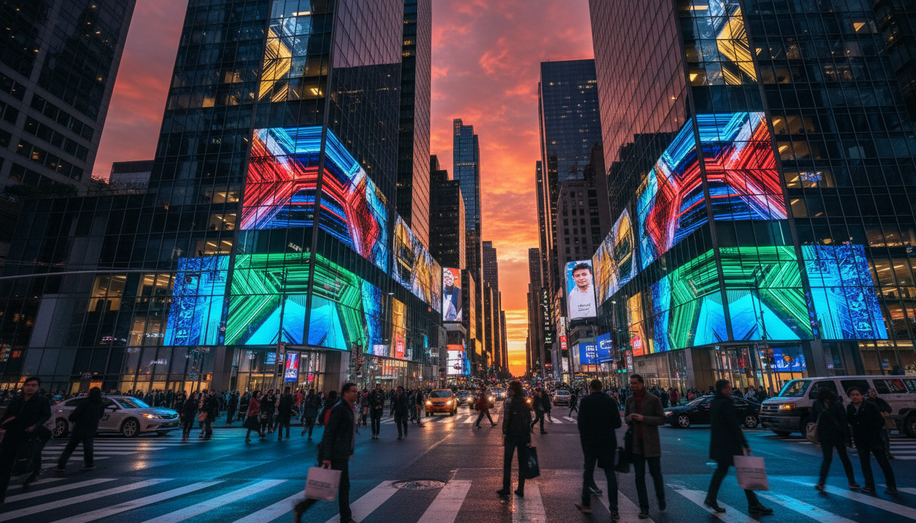

The fragmentation of modern media channels has long posed a challenge for advertisers seeking to deliver cohesive brand messages across customer touchpoints. Yet programmatic digital out-of-home (pDOOH) is fundamentally changing how brands approach omnichannel strategy, offering a bridge between the physical and digital worlds that amplifies campaign effectiveness in measurable ways.
Historically, out-of-home advertising existed in silos, disconnected from the broader marketing ecosystem. Campaigns would run in isolation, their impact difficult to quantify and their relationship to other channels unclear. This fragmentation blurred the picture of success, leaving marketers unable to understand how OOH contributed to overall business outcomes. The emergence of programmatic capabilities has dismantled these barriers, transforming DOOH from a standalone awareness channel into a fully integrated component of sophisticated omnichannel strategies.
At its core, programmatic DOOH combines the unparalleled reach and impact of out-of-home media with the precision targeting, real-time flexibility, and transparency of programmatic buying. Through supply-side platforms (SSPs) and demand-side platforms (DSPs), advertisers can now purchase impressions in real time based on specific targeting criteria, accessing multiple media owners and digital screens through unified platforms. This technological evolution has fundamentally expanded what DOOH can accomplish within a broader marketing ecosystem.
The benefits of integration extend beyond operational convenience. Recent research demonstrates that campaigns combining DOOH with other channels deliver 1.5 times higher persuasiveness and achieve 1.4 times greater attention than disconnected multichannel efforts. This synergistic effect suggests that programmatic DOOH doesn’t simply add another touchpoint—it elevates the performance of the entire campaign. Brands can now retarget audiences exposed through DOOH across display, native, video, connected TV, and audio channels, creating cohesive cross-channel journeys that drive engagement and conversions.
One of the most powerful applications of programmatic DOOH lies in its targeting capabilities. Rather than treating DOOH as a mass-reach medium, advertisers can build precise audience profiles based on shared characteristics and apply geographic filters to reach ideal customers at specific locations. More sophisticated approaches layer geo-location data with aggregated signals from premium data partners, enabling campaigns that target Burger King customers through location history or luxury automotive enthusiasts through app ownership and website visitation patterns. This precision transforms DOOH from a broad awareness tool into a performance-focused channel capable of driving tangible outcomes like sales and footfall.
Dynamic creative optimization represents another game-changing capability. Advertisers can now adapt messaging in real time based on live variables such as weather, sporting event results, or local conditions. When Oatly launched plant-based ice cream in Berlin, the brand leveraged geotargeting to monitor wind speed, humidity, and pollen levels in real time, using these environmental triggers to display specific creative variations from a library of 100 unique advertisements across 136 screens over two weeks. This level of contextual relevance would be impossible without programmatic capabilities.
For brands concerned about measurement, programmatic DOOH addresses a historical pain point. The ability to measure effectiveness in real time, assess impact across the full marketing funnel, and optimize budgets in-flight has transformed how marketers understand DOOH’s contribution to business results. Marketers can easily see how each channel contributes to overall performance and control budget deployment across channels for maximum effectiveness. This transparency enables data-driven decision-making impossible in traditional OOH environments.
Implementation requires thoughtful planning. Successful omnichannel integration begins with audience discovery—creating detailed personas and identifying DOOH inventory most likely to reach those audiences. Execution must maintain message consistency across touchpoints while allowing channels to play their distinct roles within the customer journey. Some channels drive awareness and consideration, while others nurture performance-focused outcomes. Programmatic DOOH increasingly does both, acting as what some industry observers call the “unsung hero” of omnichannel campaigns.
As privacy regulations tighten around digital channels, DOOH’s resilience as a channel becomes increasingly valuable. When combined with programmatic capabilities and integrated into omnichannel strategies, it offers brands a privacy-safe, attention-rich medium that strengthens overall campaign performance. For advertisers navigating fragmented consumer attention and fierce competition, programmatic DOOH represents not a secondary consideration but a core pillar of modern marketing success.