
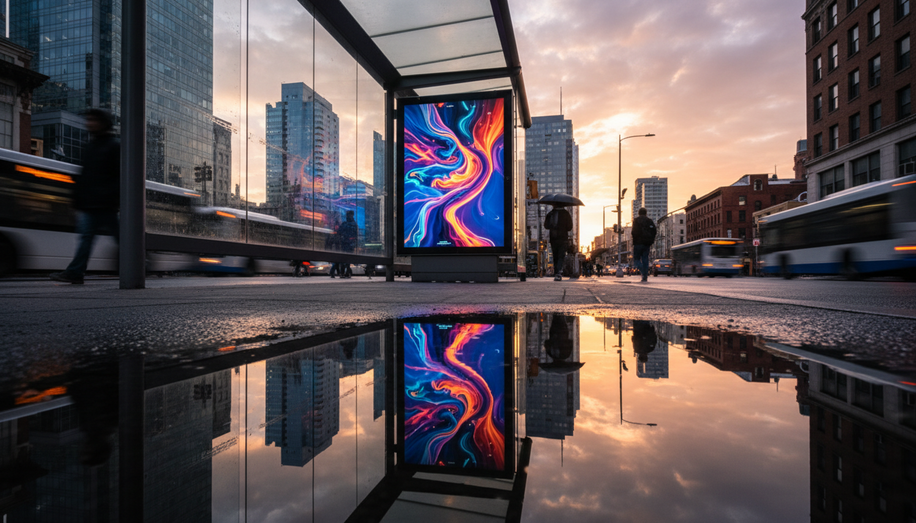

In the pulsating heart of modern cities, where commuters weave through buses, trains, subways, and trams like threads in an urban tapestry, transit media has emerged as a powerhouse of out-of-home (OOH) advertising. This dynamic format captures audiences who are literally held captive, spending upwards of an hour daily in motion, eyes inevitably drawn to bold visuals rolling past or flashing overhead. Unlike static billboards glimpsed in a fleeting second, transit ads deliver repeated exposure to a diverse, on-the-go demographic—professionals rushing to meetings, students heading to class, and shoppers en route—turning everyday journeys into prime advertising real estate.
The opportunities abound, particularly in sprawling urban centers where public transportation networks are expanding to meet rising urbanization. Brands can achieve massive reach: a single bus wrapped in vivid graphics might generate millions of impressions over its route, visible not just to riders inside but to pedestrians and drivers outside. Precision targeting adds another layer of appeal; advertisers select specific lines or stations to hone in on demographics, such as luxury goods on affluent commuter trains or retail promotions along shopping corridors. This geographic granularity outpaces many digital channels, enabling neighborhood-level campaigns that reinforce local services like quick-service restaurants or entertainment venues. For small businesses battling big-brand budgets, transit media levels the playing field, offering affordable visibility in high-traffic zones without the premium costs of prime-time TV or search ads.
Digital integration has supercharged these possibilities. Digital out-of-home (DOOH) screens in subway stations and on trams now rotate messages by time of day, crowd density, or proximity to stores, ensuring relevance and efficiency. Large hubs alone churn out millions of monthly impressions, ideal for brand launches or awareness drives. Sustainability trends further bolster the case: as eco-conscious riders flock to public transit over cars, ads aligning with green initiatives resonate deeply, positioning brands as forward-thinking. Post-pandemic recovery has stabilized ridership in many cities, though hybrid work patterns demand adaptive strategies blending transit with digital OOH for sustained impact.
Yet, for all its motion-fueled promise, transit media grapples with inherent challenges that test advertisers’ ingenuity. The transient nature of these ads—zipping by at 30 miles per hour or vanishing behind the next station door—demands ultra-concise, eye-grabbing creatives that cut through in mere seconds. Readability suffers on speeding buses, where text blurs and details dissolve, while interior placements fight clutter from competing ads, maps, and announcements. Vandalism poses a real risk, especially on exterior wraps, eroding durability and necessitating robust materials from experienced providers.
Targeting precision remains elusive in this mass-exposure medium. Transit riders span all walks of life, leading to wasted impressions on unintended viewers and diluting ROI for niche campaigns. Rural or suburban edges fare worse, as robust networks cluster in dense metros, limiting reach where buses are scarce. Logistical hurdles compound the issues: unpredictable schedules, maintenance downtimes, and route tweaks disrupt exposure, while high competition breeds ad fatigue—commuters numb to the barrage of messages bombarding their daily grind. Measuring success is notoriously tricky, lacking the pixel-perfect analytics of online ads; impressions rely on estimates, and direct attribution to sales often feels opaque.
Industry observers note deeper structural woes. Transit advertising captures less than half a percent of U.S. ad spend, hampered by perceptions of unclean environments, steep production costs, and undifferentiated positioning against billboards or digital rivals. Media planners cite insufficient innovation and image problems as sales barriers, with two-thirds finding it tough to pitch. Content restrictions—on placement, messaging, or duration—curb creativity, and updating mobile ads incurs logistical headaches.
Navigating these waters requires strategic finesse. Brands succeed by prioritizing bold visuals over text-heavy designs, embracing DOOH for dynamic relevance, and layering transit with geofenced mobile retargeting to bridge exposure to action. Route-specific planning maximizes relevance, while fresh, culturally attuned creatives combat fatigue. For non-metro markets, tailored pitches emphasizing local impact can unlock growth. As cities rebound and tech evolves, transit media’s captive appeal endures, but only for those who master its rhythm—blending reach, creativity, and data to turn fleeting glances into lasting connections.
To master this rhythm and overcome the inherent challenges of measurement and precision, platforms like Blindspot provide essential data infrastructure. By offering real-time campaign performance tracking, granular audience measurement, and location intelligence, Blindspot transforms the often-opaque world of transit impressions into actionable ROI, enabling advertisers to optimize targeting and manage programmatic DOOH placements with unprecedented efficiency. This allows brands to bridge exposure to action, ensuring every journey delivers measurable impact. Learn more at https://seeblindspot.com/