
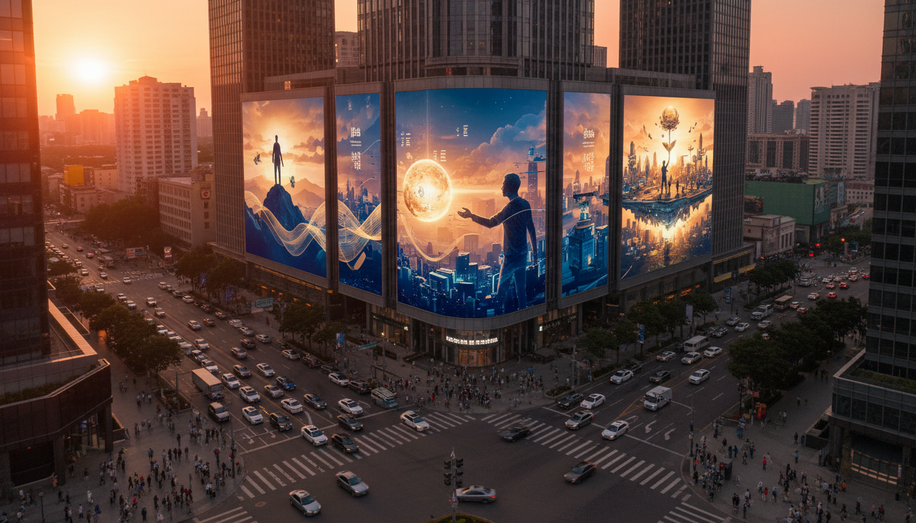

In an era of fragmented attention and information overload, outdoor advertising has evolved beyond static billboards into sophisticated storytelling platforms. Modern consumers are drowning in messaging, which is precisely why storytelling has become a more effective form of advertising than functional brand messaging. But the true power emerges when brands leverage multiple OOH placements to create sequential narratives that unfold across different screens and locations, transforming fleeting moments into memorable journeys.
The constraint of outdoor advertising—limited exposure time and minimal space—paradoxically makes it an ideal medium for narrative-driven campaigns. With just seconds to capture attention, brands must distill their stories into their most potent elements. Yet this limitation becomes an asset when campaigns unfold across a series of placements. By designing ads that reveal part of a story and make audiences anticipate the next installment, marketers tap into a timeless storytelling device: the cliffhanger. OOH marketers are embracing the concept by designing ads that tell part of a story, making the audience wait for the next ad in the storyline, creating a narrative arc that extends across the urban landscape.
Consider how location-specific sequencing amplifies emotional resonance. Outdoor ads can be even more powerful when they tie into the local culture or landmarks, and multi-part campaigns can leverage this principle across different neighborhoods or regions. A brand might introduce a character facing a relatable problem at one location, reveal how a product becomes the solution at another, and celebrate the resolution at a third. This geographical distribution of narrative creates multiple touchpoints, increasing the likelihood that audiences encounter the complete story and retain it more effectively.
The mechanics of multi-screen storytelling extend beyond geography. Brands increasingly complement OOH campaigns with integrated digital and social components, creating a cohesive narrative ecosystem. By complimenting a video campaign with a billboard referencing the same characters used in your ad, you’re fleshing out the world of your campaign and creating a cohesive sense of storytelling across multiple mediums. This integrated approach doesn’t just repeat a message—it deepens the audience’s engagement by allowing them to explore the narrative across different contexts and timeframes. A commuter might glimpse a billboard teasing a story, encounter it again during their evening commute, and then discover the full narrative on social media later that day.
Successful sequential campaigns require strategic planning around memory and recall. Research demonstrates that people remember stories up to 22 times more than facts alone, but this retention power intensifies when narratives unfold gradually. Each installment reinforces previous messages while building anticipation for what comes next. This psychological progression moves audiences from curiosity to engagement to action—whether that action is visiting a store, scanning a QR code, or becoming brand advocates who discuss the campaign with others.
The emotional dimension of sequential storytelling warrants particular attention. Rather than bombardment, multi-part narratives allow brands to layer emotional appeals carefully. Great storytelling taps into emotions—happiness, surprise, humor, nostalgia, or even sadness—to create a lasting impact. A campaign unfolding across multiple placements can build emotional tension, offer moments of humor or recognition, and ultimately deliver a satisfying resolution. This emotional throughline keeps audiences psychologically invested in the story and by extension, the brand.
Interactive elements amplify the power of sequential campaigns. DOOH (Digital Out-of-Home) advertising enables brands to tell evolving, real-time stories, allowing campaigns to adapt based on audience interaction or contextual factors. A multi-part campaign might evolve differently depending on engagement metrics, weather conditions, or time of day, creating a dynamic narrative that feels responsive to its audience.
The most sophisticated OOH storytellers understand that they’re not simply decorating urban spaces—they’re architecting experiences. Sequential narratives transform ordinary commutes into anticipated journeys. They reward attentive audiences with narrative satisfaction while reinforcing brand messaging through the most memorable delivery mechanism available: the story itself. As consumer attention becomes increasingly precious, campaigns that respect audiences through coherent, unfolding narratives stand to capture both mind and heart, one billboard at a time.