
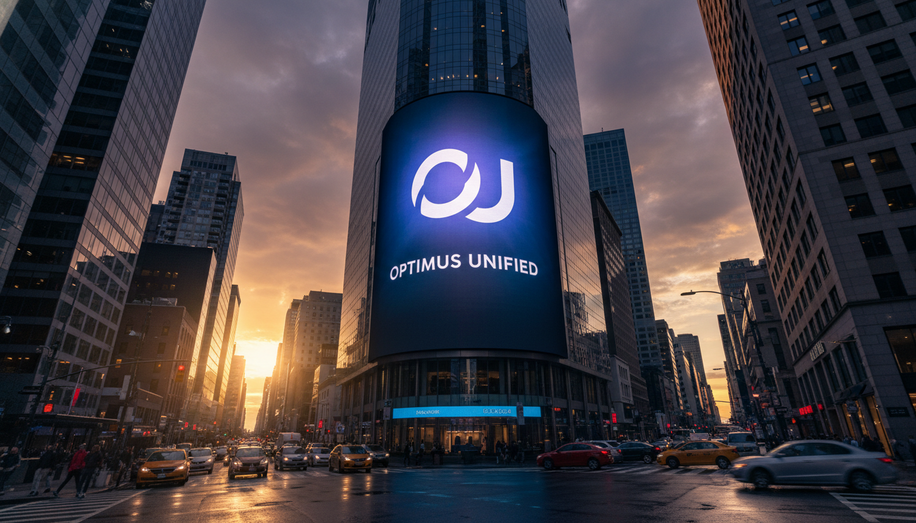

Out-of-home advertising has long been considered the domain of established corporations with expansive marketing budgets, but a growing body of evidence suggests that startups and small businesses can harness OOH’s power just as effectively—if not more creatively—than their larger counterparts. The key lies not in spending more, but in spending smarter, targeting the right locations and audiences while maintaining the creative excellence that makes outdoor advertising impossible to ignore.
For budget-conscious entrepreneurs, the initial barrier to entry is surprisingly low. Industry experts recommend that new businesses allocate approximately one month’s worth of rental expense as a testing budget for OOH campaigns. This modest investment allows startups to experiment with outdoor advertising without overcommitting resources, providing valuable data on what resonates with their local audience. When combined with a strategic media mix—such as allocating 75 percent of marketing spend to OOH and 25 percent to digital channels—small businesses can amplify their reach across physical and online spaces.
The advantage of OOH for emerging brands extends beyond cost-effectiveness. When a startup invests in outdoor advertising, it sends a powerful signal to potential customers: this is a real brand with real customers. In an age where anyone with a modest budget can launch digital ads, the decision to go big with physical OOH media conveys legitimacy and confidence. This credibility factor is particularly valuable for new ventures trying to establish themselves in competitive markets.
Location strategy proves critical for maximizing OOH’s return on investment. Rather than spreading advertisements across an entire city, startups should concentrate their efforts where potential customers naturally congregate—college campuses, cafes, shopping districts, and commute routes. When targeting consumers already in a shopping mindset, conversion rates improve dramatically. This geographic precision ensures that every advertising dollar works harder, reaching the people most likely to convert rather than dispersing resources broadly.
Creative execution forms the backbone of successful small-business OOH campaigns. An advertisement must initiate conversations and captivate prospective customers for at least six seconds, the crucial window during which viewers decide whether to engage. For startups, this means designing visuals that are bold enough to cut through the environmental clutter yet relevant to their specific community. Streetside displays and experiential campaigns—such as mobile retail trucks or interactive installations—offer particularly strong returns for businesses with limited budgets, as they generate both immediate sales and social media amplification.
The integration of OOH with digital marketing multiplies impact. A startup might place advertisements in high-traffic locations with clear calls-to-action that drive online engagement—for example, offering a discount code redeemable only during checkout. This hybrid approach captures customers at multiple touchpoints, whether they’re walking past a billboard during their commute or browsing online later that evening. It also provides measurable data on campaign effectiveness, allowing small business owners to refine their strategy over time.
One often-overlooked advantage of OOH for small businesses is the reduction in marketing fatigue. Unlike the algorithm-driven digital landscape, where consumers encounter relentless ad bombardment, outdoor advertising reaches people in physical spaces where they experience significantly less information overload. This creates a more receptive environment for messaging. Additionally, physical proximity to a brand—seeing its advertisements regularly in one’s neighborhood—builds familiarity and trust that purely digital campaigns struggle to establish.
As the effectiveness of traditional digital marketing continues to decline amid ad saturation and algorithm changes, OOH has reemerged as the creative playground where brands stand out. For startups and small businesses, this represents an unprecedented opportunity. By combining strategic location selection, creative excellence, and integrated digital components, emerging ventures can prove that outdoor advertising isn’t reserved for Fortune 500 companies—it’s an accessible, high-impact tool for any business ready to think locally and execute boldly.