
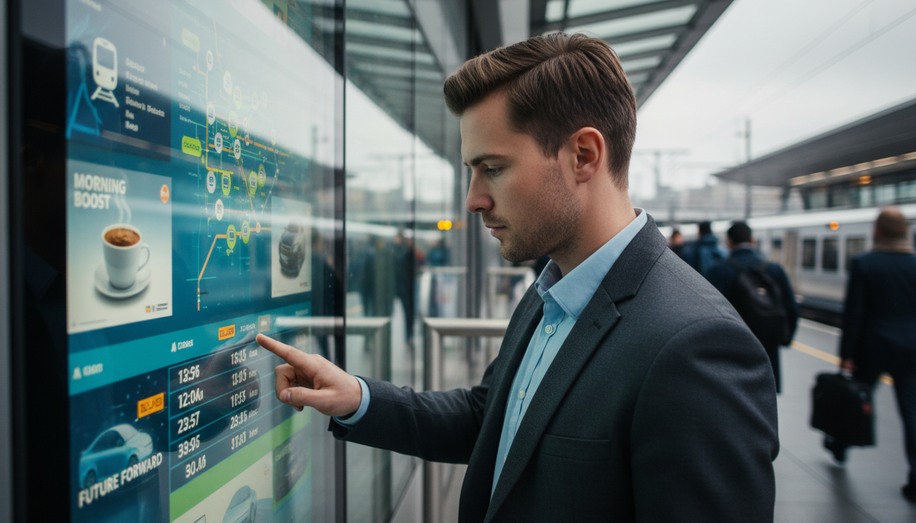

Transit advertising, once confined to static posters on horse-drawn carriages and early streetcars, has undergone a profound transformation, evolving into a dynamic ecosystem of smart, interactive displays that captivate commuters on the move. From its humble beginnings in the mid-19th century—when New York City saw the first panel signs affixed to horse-drawn vehicles in 1850—transit advertising has mirrored the rapid advancements in transportation and technology, turning everyday journeys into high-impact brand encounters. By the 1870s, cable-drawn cars in cities like San Francisco expanded ad real estate, and the 20th century brought full vehicle wraps, taxi tops, and subway panels that reached millions weekly, with studies showing 50% of consumers recalling transit ads in the past week alone.
The digital revolution accelerated this evolution in the early 2000s, as static formats gave way to digital out-of-home (DOOH) screens in buses, trains, and stations, enabling real-time updates, dayparting, and weather-triggered messaging. No longer limited to bus wraps or subway posters, today’s transit OOH integrates seamlessly with urban mobility. Smart bus shelters exemplify this shift: equipped with interactive touchscreens, Wi-Fi hotspots, and sensors, they transform passive waiting areas into engagement hubs. Commuters can scan QR codes for instant coupons, play augmented reality games, or receive personalized alerts on weather or transit delays, all while brands deliver geo-targeted content. In bustling train stations, dynamic displays leverage AI to rotate ads based on passenger flow, time of day, or even demographic data inferred from crowd analytics, ensuring relevance that static posters could never match.
This technological leap has dramatically boosted commuter engagement. Nielsen’s 2019 study revealed that full vehicle wraps captured the attention of 64% of U.S. residents aged 16 and older, outpacing other OOH formats, while public bus ads reached 55%—figures that underscore transit’s unmatched dwell time and repetition during commutes. Digital integration amplifies this: GPS-enabled ads on rideshares and taxis now trigger location-specific messaging, such as promotions for nearby stores when a vehicle nears a shopping district, fostering immediate action like app downloads or visits. Interactive elements further deepen connections; for instance, train station screens with motion sensors respond to passersby, displaying tailored content that encourages dwell and interaction, turning fleeting glances into memorable experiences.
Beyond engagement metrics, these innovations deliver measurable ROI for advertisers. The Outdoor Advertising Association of America (OAAA) highlights how transit media drives OOH growth, with digital screens allowing segmented, real-time campaigns that adapt to audience behavior. Brands can now harness commuter data—ethically sourced from anonymized mobility patterns—to optimize placements, predicting peak exposure times and refining creatives on the fly. Case studies abound: streaming services flashing personalized recommendations at subway platforms have spiked subscriptions, while retailers using shelter beacons for proximity marketing report lifts in foot traffic of up to 30%. This precision addresses past criticisms of OOH as untargeted, positioning transit as a data-driven powerhouse in the programmatic advertising era.
Looking ahead, the fusion of mobility and emerging tech promises even greater strides. 5G connectivity and edge computing will enable seamless AR overlays on train windows, where passengers view virtual try-ons for fashion brands or immersive storytelling for tourism campaigns. Airport shuttles and autonomous vehicles could incorporate holographic displays, while street furniture evolves into solar-powered “smart pods” with voice activation and facial recognition for hyper-personalized pitches—without compromising privacy through compliant tech. As urban populations swell and public transit rebounds post-pandemic, transit OOH’s reach will expand, projected to generate nearly half a billion dollars annually for operators, per the American Public Transit Association.
Yet, this evolution demands balance. Amid rising concerns over screen fatigue and data ethics, innovators prioritize seamless integration—ads that inform as much as they sell, like real-time transit updates blended with subtle branding. Successful campaigns, from vibrant vehicle wraps to shelter gamification, emphasize creativity over intrusion, ensuring commuters feel engaged rather than bombarded. In an era where attention is the ultimate currency, transit advertising’s journey from rudimentary panels to intelligent ecosystems proves its enduring power: by meeting people where they are—literally on the move—it redefines connection in the urban pulse.