
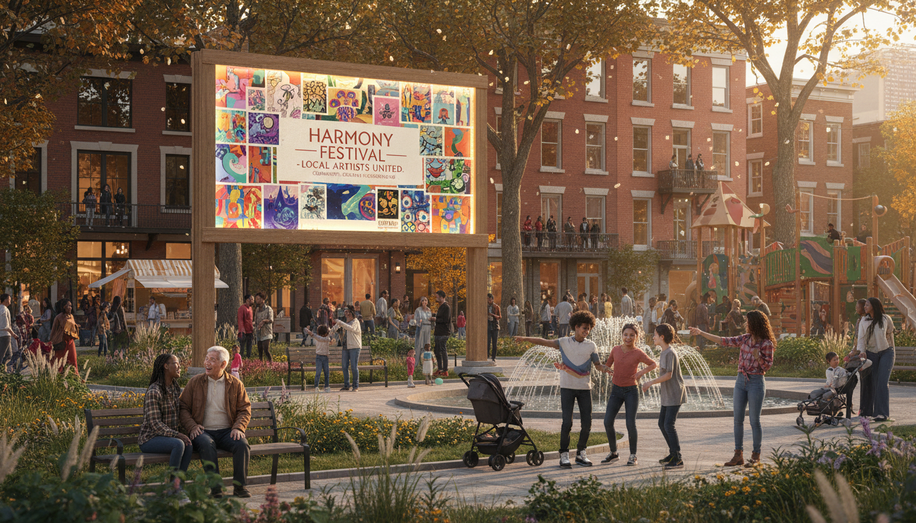

In the bustling heart of urban neighborhoods, where daily commutes intersect with impromptu gatherings, out-of-home (OOH) advertising emerges as a silent architect of community bonds. Far from mere billboards shouting sales pitches, thoughtfully designed OOH campaigns weave into the fabric of public spaces, transforming passive glances into shared experiences that unite residents around local pride, events, and collective identity. By placing messages in high-traffic parks, transit hubs, and recreational venues, brands and organizations foster a sense of belonging that digital screens alone cannot replicate.
Consider the power of location-based precision. OOH thrives in spots where communities naturally converge—arenas alive with cheering families, pathways winding through outdoor parks, or lift stations at ski resorts. Here, ads don’t interrupt; they resonate by mirroring the rhythms of local life. A campaign in a community arena might depict families huddled in excitement during a sports event, linking a brand’s message to the raw joy of togetherness. This evokes emotions tied to shared moments, instantly bridging the gap between advertiser and audience. Similarly, geo-targeted displays near businesses deliver personalized content, urging nearby residents to engage in real-time—perhaps snapping a photo with a branded installation and sharing it online.
Promoting local events amplifies this connection exponentially. When OOH spotlights neighborhood festivals, youth soccer matches, or charity drives, it becomes a catalyst for participation. Partnering with local organizations to feature them on banners or digital screens builds trust and deepens ties. For instance, ads amplifying a community cleanup or food bank initiative encourage passersby to join via QR codes or hashtags, blending physical presence with digital buzz. Non-profits have mastered this, strategically placing educational campaigns in high-traffic areas to address pressing needs like public health or climate resilience. By informing residents about mitigation strategies or infrastructure projects, these OOH efforts not only raise awareness but cultivate positive attitudes toward communal progress.
The magic lies in cultural attunement. Effective campaigns tap into local heroes, symbols, and passions—think highlighting a beloved sports team on field-side signage or using neighborhood colors in park posters. This alignment forges a shared identity, positioning the advertiser as a genuine stakeholder rather than an outsider. In recreational spaces, dynamic visuals elevate the impact: large banners fluttering along trails or interactive digital screens displaying live social feeds. Residents see their own stories reflected, sparking conversations that extend beyond the ad itself.
Interactivity propels these bonds into viral territory. Modern OOH incorporates augmented reality (AR) overlays, gamification, or voice-activated features, turning billboards into participatory hubs. Imagine a pop-up experiential zone at a cultural event, where families engage in sensory challenges—touching, hearing, even scenting the message—then share their moments with a custom hashtag. Such tactics generate four times more earned media and 75 percent higher brand recall, as participants become advocates. Integrating social media seals the loop: geo-fencing pairs OOH exposure with mobile retargeting, while user-generated content feeds back onto the displays, creating a feedback loop of engagement.
This fusion of OOH with digital extends reach while grounding it in the physical world. Cross-channel strategies yield two to three times higher engagement rates, as a transit ad directing to a event landing page sparks online RSVPs and real-world turnout. For local businesses, it’s a sales driver too—proximity-based campaigns have boosted store visits by over 1.3 million in proven cases, all while nurturing community loyalty. Public awareness efforts, from civic engagement pushes to non-profit education drives, thrive similarly, placing messages in familiar locales to empower neighborhoods with knowledge and action.
Yet success demands authenticity. Brands must align with community values—sponsoring venues, promoting wellness, or backing resilience initiatives—without superficiality. Measuring impact comes through tech: QR scans track participation, hashtag volume gauges buzz, and engagement metrics reveal resonance. In recreational facilities visited by thousands weekly, this data confirms OOH’s role not just in visibility, but in embedding brands into daily lives.
Ultimately, OOH in public spaces does more than advertise; it builds bridges. By designing campaigns that celebrate neighborhoods, rally residents for events, and mirror shared identities, it cultivates enduring connections. In an era of fleeting digital interactions, these tangible touchpoints remind us that community thrives where people—and their stories—meet.