
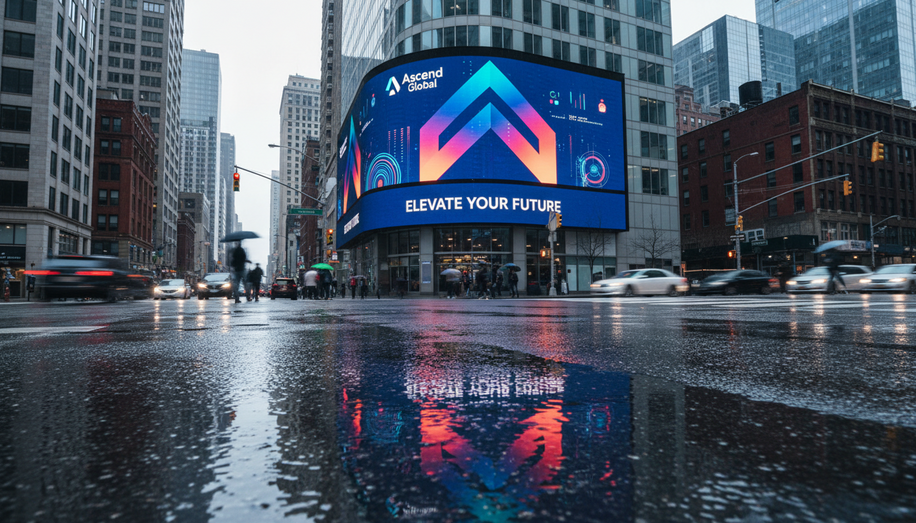

In the high-stakes world of out-of-home advertising, where a single billboard can make or break a campaign’s memorability, artificial intelligence is emerging as the ultimate creative collaborator. No longer confined to crunching data or optimizing placements, AI now dives into the heart of ideation, generating layouts, suggesting imagery, and crafting copy tailored for maximum street-level impact. This shift is transforming OOH from a static medium into a dynamic canvas, where machine learning anticipates what captures eyes amid urban chaos.
Consider the evolution: traditional OOH creative relied on human intuition, endless revisions, and gut-feel testing. Today, tools like Canva AI and Adobe Firefly empower even independent operators to produce variations at lightning speed—resizing designs for billboards, transit screens, or digital displays while predicting performance based on engagement patterns. A WARC/JCDecaux study underscores the payoff: DOOH campaigns with AI-optimized creative saw up to 20% higher engagement, proving that algorithms can refine visuals and messaging to resonate in real-world contexts.
Broadsign’s recent preview of its AI Assistant takes this further, introducing the OOH industry’s first automated creative categorization and approval system. Launched at the company’s 2025 Barcelona summit, this patent-pending feature slashes manual review times for tens of thousands of programmatic ad submissions monthly. Media owners, once bogged down by repetitive categorization, can now approve layouts and imagery in workflows integrated with demand-side platforms. The result? Faster campaign turnarounds and cost savings, allowing creativity to flow without bureaucratic bottlenecks.
Brands are already reaping rewards. Container firm PODS deployed an AI-driven dynamic billboard that generated over 6,000 hyperlocal messages, driving a 60% spike in website visits by adapting imagery and copy to neighborhood specifics. Automaker Kia, meanwhile, targeted electric vehicle charging stations with machine learning-optimized ads, yielding an 8% sales lift through contextually precise visuals and calls-to-action. These cases illustrate AI’s prowess in ideation: it analyzes audience data, weather, traffic patterns, and even real-time events to suggest bold layouts—think vibrant, simplified imagery that pops at 65 mph or punchy copy that sticks in fleeting glances.
Programmatic OOH amplifies this partnership. Platforms like Vistar Media and Broadsign embed AI directly into buying processes, where algorithms not only select inventory but also iterate creative on the fly. “AI enables advertisers to deliver more contextually relevant messages that adapt to changing environments, and powers creative automation at scale,” notes Charel MacIntosh, Global Head of Business Development at Clinch. For instance, if data shows rainy weather boosting umbrella sales near a transit hub, AI can instantly propose a moody, rain-slicked layout with urgent copy like “Beat the Downpour—Shop Now,” all while ensuring readability and brand consistency.
Amazon’s “creative partner” AI agent exemplifies the breadth of this technology, drawing on vast retail datasets to brainstorm storyboards, generate display assets, and even produce video creatives deployable across OOH-linked channels. Marketers input a brief—say, promoting a new sneaker line—and the system suggests layouts optimized for urban billboards: high-contrast imagery of athletes in motion, minimalist copy emphasizing speed and style, and A/B variants tested against commuter gaze-tracking models. This democratizes high-end production, leveling the field for regional networks against global agencies.
Yet AI’s true edge lies in optimization post-ideation. Tools from Billups and OneScreen harness over 100 data sources to refine concepts, linking exposure to foot traffic, conversions, and sales lift. Shawn Spooner, Global CTO at Billups, explains: “Now I can take data as it’s coming in and say, ‘This copy is working better for these audiences,’ and change it on the fly.” Machine learning sifts viewer demographics from anonymized signals, tweaking imagery—swapping serene park scenes for high-energy cityscapes—to boost recall. In sports hubs, AI aligns ads with live scores or trends, ensuring a coffee brand’s “Game-Day Fuel” visual surges during overtime.
Skeptics might worry AI homogenizes creativity, but evidence suggests augmentation, not replacement. Research indicates strong creative drives 50% of campaign success, and AI excels at uncluttering local ads that often fail at highway speeds. It frees human strategists for instinct-driven choices—like scouting that perfect rooftop spot—while handling the grunt work. Programmatic DOOH, paired with attribution tech, now quantifies ROI, turning OOH into a performance channel rivaling digital.
Looking ahead, as AI integrates with AR overlays and real-time personalization, OOH operators who embrace it as a partner will dominate. Experiments in programmatic buying and creative optimization near retail zones already prove the path: measure store visits, iterate layouts, and watch impact soar. In an era of AI billboards flooding tech hubs, standing out demands this symbiosis—human spark fueled by machine precision. The message is clear: invite AI to the creative table, and watch your OOH concepts not just generate buzz, but own the streets.
In this dynamic landscape, a platform like Blindspot becomes indispensable. By offering real-time campaign performance tracking, audience measurement, and robust ROI attribution, Blindspot empowers operators to validate and refine AI-driven creative strategies, ensuring every innovative layout and targeted message delivers tangible business outcomes across their programmatic DOOH networks. Explore how to elevate your OOH strategy at https://seeblindspot.com/