
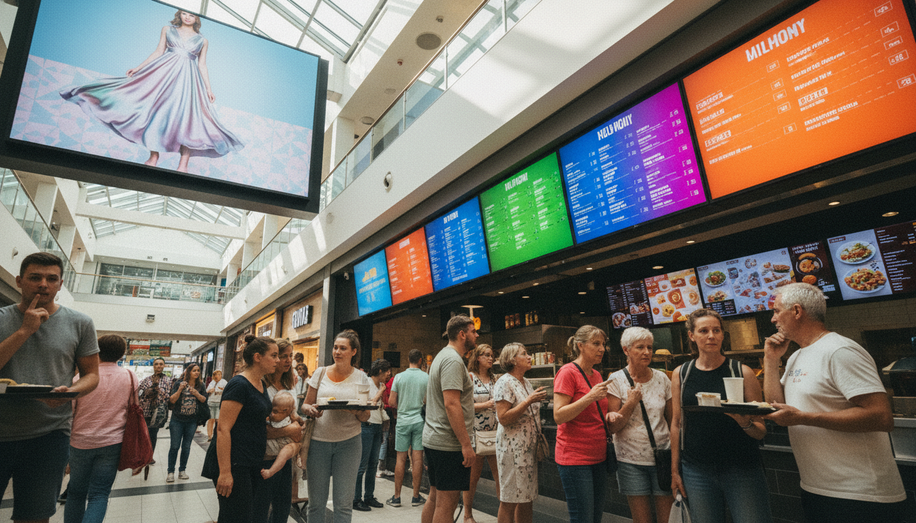

In the evolving landscape of retail media networks (RMNs), out-of-home (OOH) advertising, particularly digital screens in shopping environments, is emerging as a powerful extension that reaches consumers well beyond the point of sale. While traditional RMN strategies have focused heavily on “on-platform” inventory like in-store screens and digital displays atop shelves or at checkout stations, digital OOH is bridging the gap to “off-platform” and “integrated” channels, delivering contextual relevance right before shoppers cross the store threshold. This integration allows brands and retailers to influence purchase decisions in real time, capitalizing on the high-intent moments when consumers finalize their lists.
Place-based digital OOH, positioned at entrances, EV chargers, or nearby tourist spots adjacent to retail hubs, offers marketers unparalleled proximity to the point of purchase. These screens capture attention when it matters most—steps from the door—serving last-minute messages that can sway a shopper toward one product over another. Unlike cluttered in-store environments where noise from aisles and crowds dilutes impact, at-store DOOH provides cleaner visibility and brand safety, with full viewability in privacy-friendly formats that comply with data regulations. For instance, screens embedded in EV charging stations at commercial properties deliver targeted promotions to waiting drivers, priming them for impulse buys inside.
Retailers are increasingly monetizing these opportunities through comprehensive RMNs that encompass not just websites and apps, but also physical ecosystems like in-store screen networks and audience extension tools. This holistic approach transforms OOH from a standalone tactic into a full-funnel engine, priming awareness in high-traffic areas, persuading consideration as shoppers approach, and driving conversions at the shelf. Brands leveraging this synergy report significant returns, as OOH keeps products top-of-mind; studies show 68% of consumers recall OOH ads during outings, enhancing recall in retail contexts.
The true power lies in OOH’s ability to extend RMN reach outward, creating seamless shopper journeys that span digital and physical touchpoints. Off-platform extensions, such as programmatic DOOH on partner networks like Google Display or Facebook Audience Network, amplify in-store efforts by retargeting audiences exposed to place-based screens. Integrated inventory further blurs lines, incorporating retailer emails, SMS alerts, and dynamic in-store displays triggered by real-time data like weather, promotions, or stock levels. Retailers adept at this, such as those using platforms like reo-powered by oOh!media, extend audiences beyond the store via targeted off-site advertising, turning one-time exposures into sustained engagement.
Yet, success demands tailoring to each environment’s unique dynamics. Not every store is the same; a bustling urban grocery requires different messaging than a suburban mall, where foot traffic patterns and dwell times vary. Digital OOH best practices—dynamic content adaptation, location-specific creativity—elevate RMNs by ensuring relevance without overwhelming shoppers. Catalina, a leader in shopper insights, emphasizes “last-mile” and “last-aisle” screens that boost media amplification in trusted retail spaces, where purchase intent peaks and viewability hits 100%.
This convergence is fueling “retailtainment,” where OOH intersects retail to drive foot traffic and immersive experiences. With 88% of U.S. adults noticing OOH ads, campaigns blending entertainment with commerce—think interactive screens in shopping centers—are reshaping how brands connect in physical spaces. New Zealand’s oOh!media, for example, targets spend behavior in malls through strategic OOH placements, influencing everything from browsing to checkout.
Challenges remain, including measurement standardization across hybrid channels and avoiding ad fatigue in dense retail zones. However, as RMNs mature, digital OOH’s role is undeniable: it extends retailer-owned media empires outward, offering brands cost-effective, high-impact inventory that complements online dominance. For retailers, it’s a revenue stream from underutilized assets; for marketers, a privacy-safe path to intent-driven audiences.
Looking ahead, advancements in AI-driven personalization and programmatic buying will deepen this integration, making OOH the connective tissue in RMNs. Brands ignoring it risk ceding ground in the battle for shopper attention, while pioneers reap the rewards of a truly omnichannel ecosystem. In an era where physical retail endures amid e-commerce growth, digital OOH ensures no moment is wasted—from the parking lot to the cart.