
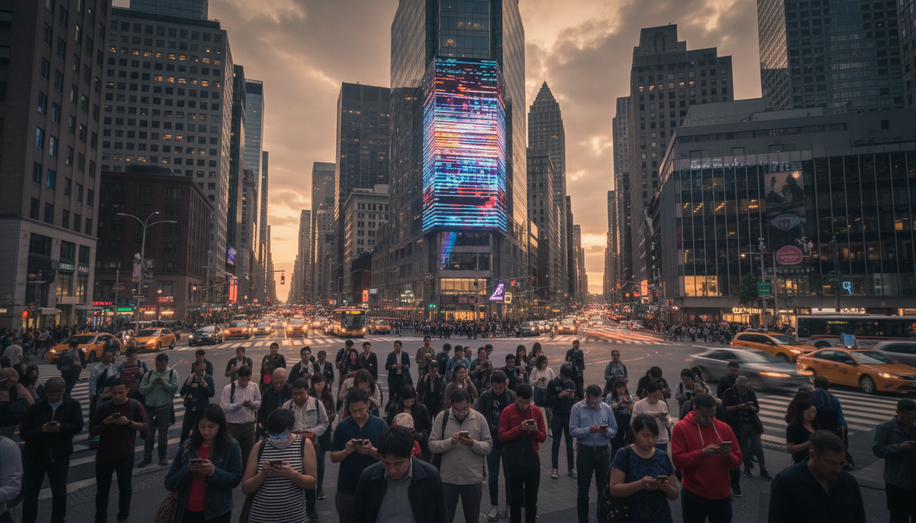

In the crowded landscape of modern advertising, out-of-home (OOH) campaigns have long relied on capturing fleeting glances from passersby, but a new era demands more than eyeballs—it requires action. Geofencing and mobile retargeting are transforming static billboards into dynamic gateways, extending their reach by capturing audiences exposed to physical ads and re-engaging them on their smartphones with precision and immediacy. This fusion of physical and digital channels creates measurable journeys from awareness to conversion, proving that OOH’s power lies not just in visibility, but in verifiable impact.
Geofencing works by establishing virtual boundaries around key locations, such as billboards, transit stops, or high-traffic zones like shopping malls and stadiums. When a user’s mobile device crosses these digital perimeters—detected via GPS coordinates—the system triggers tailored responses, from push notifications to display ads. For OOH advertisers, this means turning a billboard sighting into an instant digital follow-up. Imagine a commuter glancing at a transit ad for a new smartphone; moments later, as they exit the geofenced area around the station, their phone serves an ad with a special discount code for that exact model. This seamless bridge reinforces the message, boosting brand recall and driving users toward purchase.
Mobile retargeting takes this a step further by building custom audience segments from geofencing data. Advertisers identify individuals who lingered near OOH displays, then serve them complementary mobile content later—whether in real-time or saved for future campaigns. Studies highlight how OOH and mobile naturally complement each other, with geofencing enabling real-time retargeting around media units, stores, or even competitors’ locations. For instance, a retail brand might geofence a billboard on a busy highway, capturing data on exposed drivers, and later retarget them with mobile ads when they approach a nearby store. This location-based precision significantly lifts engagement, with one analysis noting geofencing campaigns can achieve 20% higher conversion rates through personalized, timely offers.
The true advantage emerges in attribution and measurement, areas where traditional OOH has often fallen short. By tracking user movements post-exposure, marketers link billboard impressions to mobile interactions, in-store visits, and sales. Platforms now attribute conversions across channels, revealing how an OOH ad sparks digital engagement or foot traffic. This data-driven insight optimizes spend: if a geofenced billboard near an airport drives more mobile clicks than one downtown, budgets shift accordingly. Moreover, consistent messaging across OOH and mobile—using matching visuals and calls-to-action—amplifies recognition, turning passive viewers into active responders.
Timing is critical for success. Delivering retargeted ads shortly after OOH exposure capitalizes on fresh recall, while time-sensitive promotions urge immediate action. Relevance reigns supreme; ads must add value, like event-specific offers geofenced around festivals or conventions, where audiences are already primed. For digital out-of-home (DOOH), the synergy intensifies: geofencing pairs with dynamic screens to deliver weather-triggered or real-time content, such as rain gear promotions during a downpour. Brands like those using transit OOH draw geofences around bus routes or trains, retargeting riders with mobile display ads that extend the campaign’s life beyond the ride.
Challenges persist, particularly around privacy and execution. Users must opt into location services, and over-saturation risks ad fatigue, so advertisers prioritize high-value, non-intrusive messages. Best practices emphasize hyper-localization: tailor geofences to events or points of interest for relevance, and integrate with omnichannel strategies for a unified experience. Agencies specializing in this space, like those offering mobile retargeting for OOH buys, stress testing geofence radii—too broad dilutes targeting, too narrow misses scale.
Real-world applications underscore the potential. Automotive brands geofence car dealership billboards, retargeting passersby with model-specific videos on their phones. Retailers target mall-adjacent OOH to lure shoppers with app-exclusive deals. Even in competitive arenas, geofencing around rivals’ sites captures “conquesting” audiences, redirecting interest. As technology evolves, these tactics promise not just amplification, but reinvention of OOH as a catalyst for full-funnel performance.
Ultimately, geofencing and mobile retargeting elevate OOH from impression-based to outcome-driven advertising. By connecting the physical spark of a billboard with the digital fuel of mobile, campaigns achieve deeper engagement, precise measurement, and higher ROI. In an attention-scarce world, this isn’t just extension—it’s evolution, ensuring every eyeball counts toward real results.