
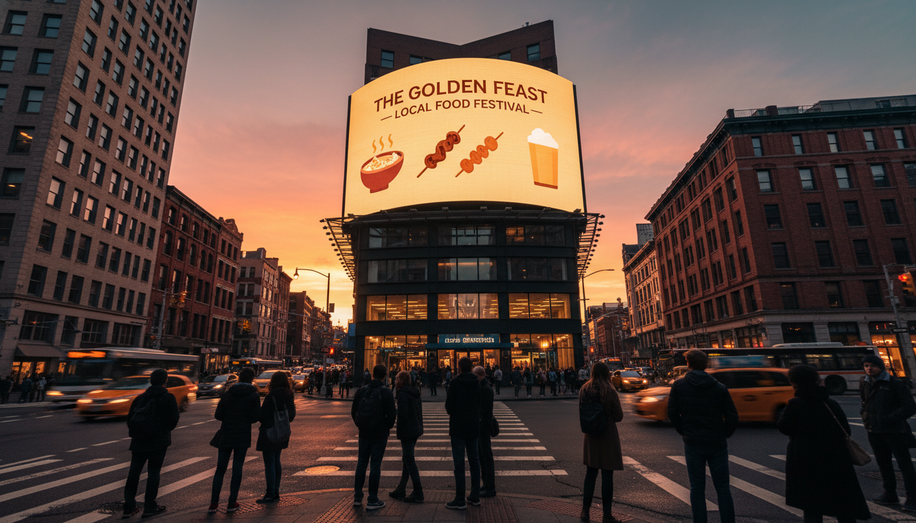

In the bustling heart of a neighborhood, where festivals erupt in city parks and weekend markets draw crowds to sunlit streets, out-of-home (OOH) advertising emerges as a precision tool for hyper-local events. By strategically placing billboards, digital screens, and posters in high-traffic zones near these time-bound gatherings, organizers and sponsors can skyrocket attendance and forge deeper community ties, turning passive passersby into eager participants.
Hyper-local OOH thrives on its ability to deliver messages with laser-focused relevance, targeting specific geographic pockets where potential attendees live, work, or wander. Unlike broad-spectrum campaigns that dilute impact across vast regions, this approach zeros in on neighborhoods, leveraging data-driven insights to position ads along commute routes, shopping districts, and event vicinities. For a weekend craft market in Brooklyn or a summer concert series in Austin, advertisers might deploy digital OOH screens at bus stops and intersections within a one-mile radius, flashing dynamic creatives that highlight lineup headliners, vendor spotlights, or limited-time ticket deals. This precision targeting minimizes wasted impressions, ensuring messages reach ideal audiences at the optimal moment—right before they decide their plans.
The power of relevance cannot be overstated. Hyper-local ads resonate by weaving in elements of local culture, stories, and immediacy, fostering a sense of belonging that broader media often misses. Imagine a festival poster featuring testimonials from nearby residents or nods to iconic landmarks, like a mural-style ad for a food truck rally referencing the town’s beloved annual chili cook-off. Brands like Postmates have excelled here, merging neighborhood restaurant shoutouts with event tie-ins to spark instant recognition and excitement. For concerts, OOH might showcase artist visuals against backdrops of local graffiti art, while market ads could spotlight hyper-specific calls-to-action, such as “Sample free bites from your corner bakery this Saturday—2 blocks away!” This tailored storytelling boosts engagement rates, as audiences feel personally addressed, prompting shares on social media and word-of-mouth buzz that amplifies reach organically.
Geofencing takes this strategy further, blending OOH’s physical presence with digital smarts. By defining virtual boundaries around event sites—say, a music festival perimeter—advertisers trigger complementary mobile notifications as devices enter the zone, reinforcing billboard messages with app-exclusive offers like VIP upgrades or shuttle info. This synergy is particularly potent for time-sensitive events: a geofence around a pop-up concert venue could alert commuters mid-drive, syncing with nearby DOOH screens that rotate real-time crowd updates or weather-proof tips. Businesses targeting festivals report heightened attendance, with hyper-local campaigns driving measurable uplifts in foot traffic by capturing audiences already primed for the experience.
Integration across channels elevates OOH from standalone tactic to ecosystem driver. Pairing hyper-local billboards with social media hashtags encourages user-generated content—think attendees snapping festival ads emblazoned with #LocalJamVibes and tagging organizers, fueling viral loops. Event promoters can direct OOH traffic to landing pages offering geo-specific perks, like discounted entry for scanning a QR code, which not only boosts immediate attendance but also captures data for future targeting. For markets, this might mean ads funneling shoppers to a digital map of stalls, while concert campaigns amplify online ticket sales post-exposure. Research underscores the efficacy: localized OOH generates higher conversion rates than generic efforts, as it sparks searches, app downloads, and visits while nurturing community loyalty.
Cost-efficiency seals the deal for event organizers often strapped by budgets. Hyper-local deployments sidestep the expense of citywide buys, focusing spend on high-yield spots like community hubs or transit nodes. Non-profits and small festivals, in particular, benefit from flexible OOH formats—transient digital rotations or short-term posters—that deliver outsized visibility without breaking the bank. Data from providers confirms this: campaigns in tight radii yield superior ROI, with engagement metrics like dwell time and social mentions proving the medium’s knack for turning visibility into action.
Real-world triumphs abound. In one campaign, hyper-local billboards around a neighborhood music fest used real-time relevance—humor tied to local weather quirks and influencer cameos—to ignite conversations, spreading via word-of-mouth as attendees shared the “that’s so us” creatives. Markets have seen similar wins, with OOH directing crowds to under-the-radar stalls, enhancing vendor sales and repeat visits. These efforts don’t just fill seats; they cultivate lasting participation, positioning events as communal cornerstones.
Yet success hinges on execution: timing is paramount, with ads ramping up days before launch and tapering post-event to capture last-minute deciders. Creatives must evolve—static for broad awareness, dynamic DOOH for urgency—and analytics track everything from impressions to redemption rates. As urban life pulses with pop-ups and gatherings, hyper-local OOH stands as the indispensable spark, illuminating paths to packed venues and vibrant communities.