
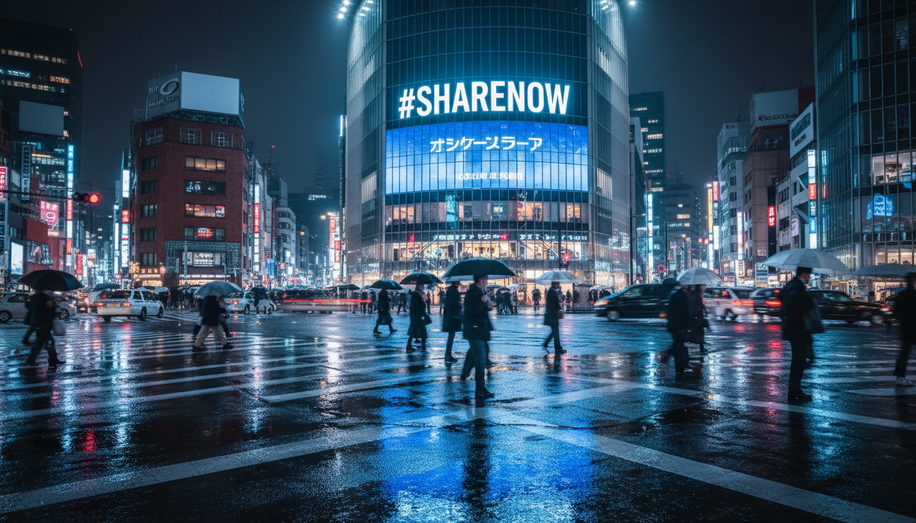

In the bustling streets of urban centers, where billboards tower over commuters and digital screens pulse with life, out-of-home (OOH) advertising has evolved from a passive medium into a catalyst for digital action. Campaigns that masterfully bridge the physical and virtual realms turn fleeting impressions into social shares, website visits, and online conversations, proving that strategic design can ignite engagement without a single QR code scan. This transformation relies on clever prompts, shareable moments, and cross-channel synergy, delivering measurable lifts in brand recall and conversions.
Consider the power of shareable content engineered for the smartphone era. Advertisers craft visuals so striking—think surreal murals with optical illusions or slogans that double as Instagram captions—that passersby instinctively pull out their phones to capture and post. A fitness brand in Delhi, for instance, blanketed metro station hoardings with bold “Transform Your Life in 30 Days” messaging, mirrored across Instagram carousels, sparking user posts that extended reach organically. Such designs leverage human psychology: compelling imagery boosts shareability, with experiential elements generating four times more earned media than static ads. By forgoing scannable tech, these campaigns invite organic amplification, where a single photo shared with a branded hashtag can ripple through networks, fostering user-generated content (UGC) that feels authentic rather than forced.
Hashtags emerge as the linchpin of this impression-to-share pipeline, serving as simple, memorable calls-to-action emblazoned directly on displays. “Snap this and #TransformWithUs” or “#StreetArtChallenge” transforms viewers into participants, prompting immediate social media activity. Research underscores the efficacy: nearly half of adults report that OOH ads influence their social media behaviors, with 45% more likely to follow brands online after exposure. Clear Channel Outdoor’s digital billboards take this further by aggregating live hashtag feeds in real-time, displaying user posts alongside the ad to create a feedback loop of engagement. This not only validates contributors but encourages others to join, amplifying buzz without digital intermediaries. Brands report 2-3 times higher engagement rates when OOH prompts align seamlessly with social platforms.
Directing traffic to websites demands equally inventive tactics, focusing on intrigue over explicit links. Memorable custom URLs, like “SeeTheChangeNow.com,” or promo codes teased on billboards—”Text URBANVIBE to 12345 for exclusive access”—guide users home without visual clutter. Google data reveals 48% of consumers visit a brand’s site post-OOH exposure when campaigns include such subtle nudges. Proximity-based strategies enhance this: geofencing retargets those near the display with tailored digital ads, while data-driven site selection ensures high-traffic spots reach digitally savvy audiences. A campaign blending OOH with mobile retargeting saw 65% higher conversions, as offline sparks fueled online follow-through.
Experiential activations elevate these tactics, turning static displays into interactive hubs that demand digital extension. Pop-up installations at high-traffic zones, complete with sensory elements like soundscapes or touchable sculptures, create “must-share” moments. Imagine a beverage brand’s billboard morphing into a mist-spraying activation where visitors pose under cascading water effects, urged to “#RefreshTheCity” online. Such setups yield 75% higher brand recall and viral coverage, as participants broadcast their involvement. Gamification adds another layer: challenges like “Spot the hidden icon and share your find with #HuntTheHidden” on digital OOH screens spur competition and UGC, with 13% of smartphone users historically uploading content after similar prompts.
Cross-channel integration cements these efforts, unifying messaging across OOH and digital for cohesive narratives. A unified brand voice—say, a cheeky tagline echoing from billboards to TikTok—builds trust and repetition, improving recall. Real-time social integration, such as voice-activated billboards responding to shouts or AR illusions viewable via standard cameras (minus QR), keeps interactions seamless. Measurement follows suit: baseline metrics track social mentions, foot traffic via geolocation, and lift studies quantify long-term impact, revealing ROI that standalone digital can’t match.
Yet success hinges on precision. Data-driven targeting selects locations aligned with audience analytics, ensuring prompts land with maximum relevance. Avoiding ad fatigue through balanced frequency maintains freshness, while A/B testing creatives refines what resonates. Experiential OOH, paired with geo-targeted social ads, creates seamless experiences: a viewer at a subway mural sees Instagram prompts nearby, blurring physical and digital boundaries.
The proof lies in results. Proximity campaigns have driven over 1.3 million store visits, while integrated efforts boast superior engagement and attribution. In 2026, as digital OOH strategies advance, the medium’s strength remains its ability to command real-world attention, then propel it online through human-centric design. Brands that prioritize shareability, hashtags, and experiential hooks don’t just advertise—they orchestrate movements, converting street-level glances into digital symphonies of engagement.