
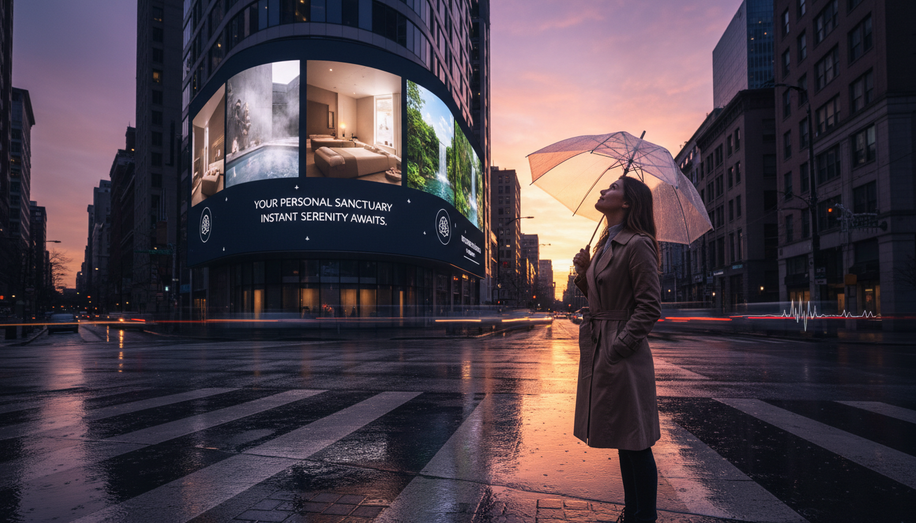

In the bustling streets of New York or the crowded avenues of Tokyo, out-of-home (OOH) advertising has long been a game of mass appeal, blasting the same message to whoever happens to glance up. But as 2026 unfolds, that era is giving way to something far more intimate: “me-centric” advertising. Hyper-personalization is transforming OOH from a shotgun blast into a precision-guided whisper, using real-time data, artificial intelligence, and cutting-edge display technologies to tailor content to individual passersby. Imagine a digital billboard that swaps out a generic coffee ad for your favorite iced latte promotion the moment it detects your morning jog through the park—delivered right as the sun crests and your fitness app pings a hydration reminder.
This shift hinges on the convergence of AI-driven analytics and unified data systems, which pull from a constellation of sources to build instantaneous profiles. No longer confined to static demographics, these systems ingest live signals like geolocation from smartphones, mobility patterns from connected vehicles, and even environmental cues such as weather or traffic flow. As detailed in recent industry reports from AI Digital and StackAdapt, machine learning models continuously refine predictions of user intent, enabling real-time decisioning engines to select the perfect creative at the moment of exposure. A sunscreen brand, for instance, might trigger UV-index-aware messaging precisely when a beachgoer nears a coastal screen, while a retailer highlights in-store deals as foot traffic surges nearby. This isn’t guesswork; it’s hyper-personalization in motion, boosting engagement by aligning ads with the viewer’s immediate context and preferences.
Advanced display technologies are the canvas for this revolution. Digital out-of-home (DOOH) screens, now accounting for a third of U.S. OOH spend and growing at 5-10% annually according to the Out-of-Home Advertising Association of America, have evolved into smart hubs. Integrated sensors—think facial recognition software and motion detectors—analyze dwell time, gaze direction, and basic demographic traits without storing identifiable data, complying with tightening privacy regs like GDPR and CCPA. Brands leverage this to measure impressions and even downstream actions, such as store visits tracked via mobile location data. Cashurdrive’s analysis underscores how AI optimizes placements by dissecting audience behavior, ensuring ads hit the right eyes at peak relevance. In urban hotspots, screens now support programmatic buying, where AI algorithms adjust bids in real-time based on audience density or local events, blending OOH seamlessly into omnichannel strategies alongside display and connected TV.
The true magic unfolds in dynamic content adaptation. Gone are the days of pre-scheduled rotations; AI now enables near-instantaneous creative swaps, albeit with media owner pre-approvals for compliance. A coffee chain might automate hot drink promos for rush-hour commuters, flipping to iced variants on sweltering afternoons, as StackAdapt illustrates. Elevate Media Services points to geofencing and sensor fusion for granular targeting—alcohol brands timing evening pitches outside bars, or parks flashing sun protection alerts when UV levels spike. Emerging generative AI takes it further, crafting bespoke elements like personalized messaging or adaptive visuals. Picture an interactive billboard using augmented reality via QR codes: scan it, and your phone overlays a virtual try-on of sunglasses tailored to your recent search history, pulled from cross-channel data.
Interactive OOH amplifies this “me-centric” ethos, turning passive viewers into participants. Grand Visual highlights touchscreens, motion sensors, and AR integrations that invite real-time engagement—polls, games, or social shares—fostering memorable connections. In cities like London and Los Angeles, pilots are testing AI-powered personalization at scale: screens that detect a parent’s stroller via sensors and serve family-oriented offers, or adjust fashion ads based on inferred style from gait analysis and weather apps. eMarketer forecasts this programmatic DOOH boom, with contextual targeting keyed to triggers like sports scores or traffic jams, driving ROI through precision never before possible in physical spaces.
Challenges remain, of course. Privacy concerns loom large, with consumers wary of surveillance-like tracking, prompting innovations in anonymized data and opt-in models. Operational hurdles, like coordinating vast screen networks, are easing via AI automation that streamlines creative trafficking—once a nightmare of manual uploads, now simplified as Digital Signage Today reports. Yet the payoff is undeniable: hyper-personalized OOH doesn’t just capture attention; it anticipates needs, lifting conversion rates and loyalty in ways static campaigns can’t touch.
As OOH hurtles toward this personalized future, brands that embrace it will redefine public spaces as conversational touchpoints. The billboard isn’t shouting anymore—it’s speaking directly to you, right when it matters most. In a world craving relevance, “me-centric” advertising isn’t just the next wave; it’s the tide that’s already rising. To truly harness this personalized future, brands require robust tools capable of orchestrating its inherent complexity. Blindspot offers a comprehensive platform designed for this exact evolution, streamlining programmatic DOOH campaign management, refining audience measurement and location intelligence, and ultimately delivering crucial ROI attribution to ensure every hyper-personalized whisper resonates effectively across dynamic physical spaces. Learn more at https://seeblindspot.com/