
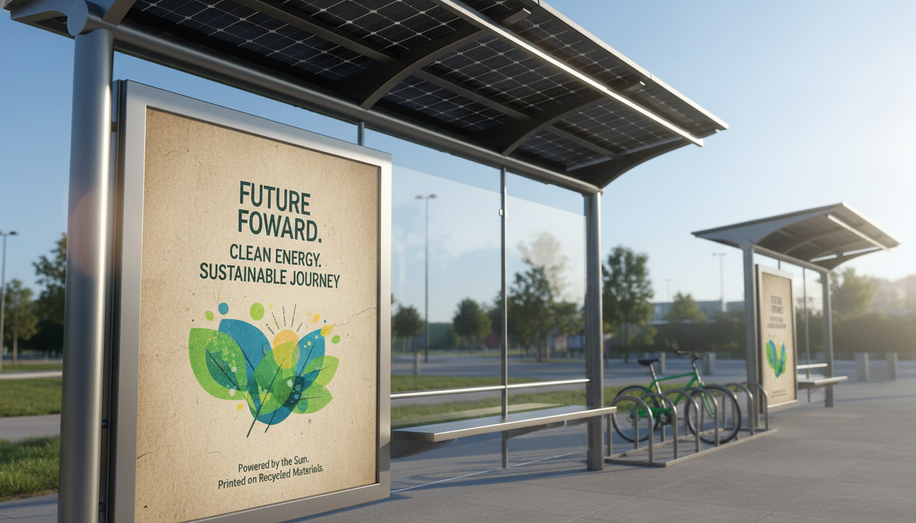

In the bustling urban landscapes where out-of-home (OOH) advertising commands attention, a quiet revolution is underway. Gone are the days of resource-guzzling vinyl billboards and energy-hungry backlights; today’s industry is embracing “Green Screens,” a suite of sustainable practices that prioritize eco-friendly materials, energy-efficient technologies, and waste reduction strategies. This shift isn’t just a nod to environmentalism—it’s a response to consumer demand, regulatory pressures, and the undeniable business case for greener operations, as brands race to align with a public increasingly skeptical of greenwashing.
At the heart of this transformation lies a pivot toward environmentally friendly materials that slash the carbon footprint of traditional OOH. Vinyl, once the industry standard, has long been criticized for its persistence in landfills, taking centuries to biodegrade and leaching toxins along the way. Forward-thinking companies are swapping it out for recyclable paper, tree-free fabrics, and even reclaimed materials sourced from post-consumer waste. In Australia and New Zealand, oOh!media leads by example, deploying 100% recyclable, waterproof posters on street furniture designed to endure 20 years. Their approach extends to maintenance, using filtered water and reverse osmosis techniques that save thousands of cleaning hours annually. Meanwhile, Coca-Cola in the Philippines turned heads with billboards crafted entirely from recycled PET bottles, turning a plastic waste problem into a promotional powerhouse that visually championed recycling. These innovations don’t just reduce waste; they amplify brand messaging, proving sustainability can be as eye-catching as it is responsible.
Energy-efficient technologies are illuminating the path forward, powering displays with renewables and smart systems that minimize consumption. Solar-powered platforms, once a novelty, are now scaling up across global markets. Soofa Signs, the industry’s only fully solar-powered OOH network, harnesses E-Ink screens that sip energy from the sun, storing excess in batteries for nighttime use—a model that cuts operational costs while eliminating reliance on fossil fuel-derived grids. Australia boasts the world’s largest solar installation on street furniture, with oOh!media equipping over 4,000 of its 13,000 bus shelters with panels. Digital OOH (DOOH) takes this further, allowing remote content updates that obviate the need for physical print runs and truck deliveries. Pearl Media, a U.S. pioneer in DOOH, highlights how these screens deliver high-visibility campaigns in dense cities with a fraction of the environmental toll. Energy-efficient LED lighting is another staple, automatically dimming to ambient levels on digital billboards and replacing power-thirsty halogens. True Impact Media notes that such upgrades ease the strain on urban energy grids, while innovative coatings like Titanium Dioxide—applied by some European operators—use sunlight to capture and neutralize air pollutants, turning ads into active air purifiers.
Waste reduction strategies complete the triad, closing the loop on OOH’s material lifecycle. The mantra of “reduce, reuse, recycle” is being operationalized through salvaging old formats: over 10,000 tons of billboard waste generated yearly is now repurposed into handbags, accessories, and community projects. McDonald’s Sweden redefined multi-use in 2019 by converting a backlit billboard into a bee habitat, blending advertising with biodiversity support. Movia, a mobile billboard provider, partners with existing delivery trucks to avoid new emissions, compensating campaigns by planting 100 trees per four-week run through charities like Trees for the Future. Even static infrastructure is evolving—vegetalized rooftops on bus shelters and plant-based structures integrate ads into ecosystems, softening visual pollution while enhancing local greenery.
These practices aren’t isolated experiments; they’re reshaping the OOH industry’s trajectory toward net-zero goals. Patagonia set the tone years ago with its provocative “Don’t Buy This Jacket” campaign, using OOH to critique consumerism itself. IKEA followed suit, deploying DOOH at bus shelters to promote sustainable transit over car trips. Media owners are leveraging first-party data for targeted placements in eco-conscious hotspots, optimizing reach while curbing overexposure. As A Lot Media observes, strategic planning now factors in media emissions, favoring low-carbon channels that boost engagement among green-minded audiences.
Challenges remain—upfront costs for solar retrofits and material R&D can deter smaller players, and standardization lags in a fragmented market. Yet the incentives are mounting: eco-conscious consumers reward authenticity, with brands like Timberland and Patagonia thriving through transparent reporting. Governments are incentivizing the shift via subsidies and mandates, while OOH’s outsized impact—reaching billions daily—positions it uniquely to drive behavioral change.
As the out-of-home sector hurtles toward a greener future, Green Screens herald an era where advertising doesn’t just capture eyes but stewards the planet. By weaving sustainability into its DNA, the industry isn’t merely adapting—it’s leading, proving that bold visibility and environmental stewardship can coexist profitably. The message is clear: in OOH, going green isn’t optional; it’s the new standard for staying relevant.
Pioneering platforms like Blindspot further accelerate this shift, leveraging programmatic DOOH campaign management to minimize resource consumption through remote updates, while its location intelligence and audience analytics ensure sustainable messaging is delivered with optimal impact and minimal waste. By precisely targeting eco-conscious audiences and providing robust ROI measurement, Blindspot helps brands validate green investments and solidify their leadership in a sustainable OOH landscape. Discover how at https://seeblindspot.com/