
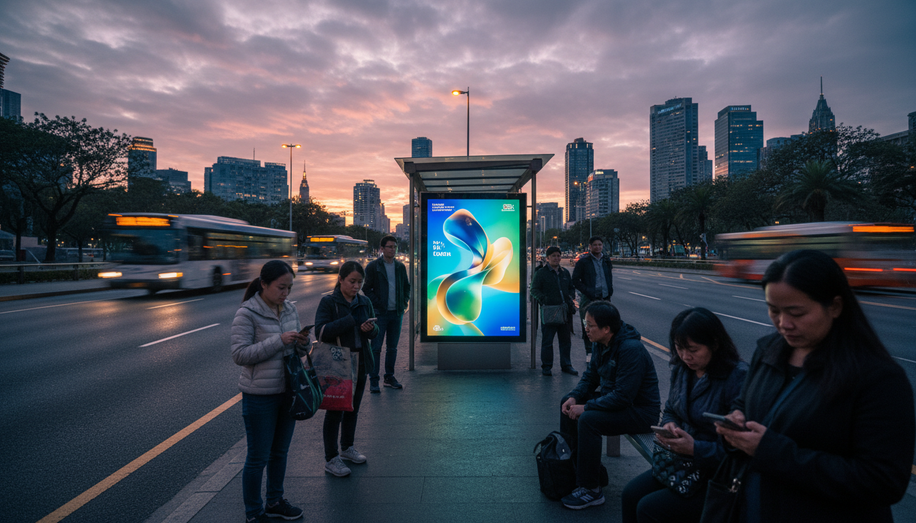

In the high-stakes world of out-of-home (OOH) advertising, where campaigns blast across billboards, bus shelters, and digital screens, proving return on investment has long been a challenge. Digital channels boast clicks, conversions, and pixel-perfect tracking, but OOH’s real-world impact unfolds in the subtle shifts of consumer minds—greater awareness, sharper recall, warmer perceptions. Enter brand lift studies, the rigorous methodology gaining traction among savvy marketers to quantify these intangible effects. By isolating the true influence of OOH exposure, these studies cut through the noise, delivering hard data that elevates OOH from gut-feel medium to strategic powerhouse.
At their core, brand lift studies measure the incremental change in key metrics before and after an OOH campaign. Unlike simplistic impression counts, they focus on outcomes like ad recall, brand familiarity, purchase intent, and perception shifts. The gold standard involves comparing two carefully matched groups: an exposed cohort, who encountered the ads near campaign screens, and a control group, who did not. This exposed-versus-control approach, pioneered in digital but now refined for OOH, reveals genuine uplift by neutralizing external variables. For instance, platforms like Blip Billboards highlight how digital OOH (DOOH) on billboards drives impressions that, after six or more views, convert passive viewers into qualified buyers, with lift manifesting in heightened engagement and sales funnel progression.
Conducting a brand lift study starts with precise targeting. Partners such as Happydemics or MFour define “broadcast zones” based on geo-locations of OOH assets, using GDPR-compliant mobile and in-app surveys to recruit respondents. Proximity matters: sophisticated providers verify exposure not just by zip code, but by confirming devices entered the “viewable cone” of a billboard, as Reveal Mobile advocates. Surveys then probe with aided or unaided questions—”Recall seeing this ad?” or “Which brands would you consider?”—deployed rapidly post-exposure to capture fresh memory. Responses from ad-recallers (exposed) are benchmarked against non-recallers (control), matched for demographics like age and gender. The delta—say, a 15% spike in unaided brand recall—becomes the lift metric, statistically validated to ensure significance.
Yet, pitfalls lurk in flawed execution. OOH Today warns of “spatial correlation,” where control groups near ad locations naturally visit stores more, inflating results regardless of exposure. Best practices demand geographic randomization or advanced matching beyond demographics, incorporating mobility patterns and baseline behaviors. Incrementality testing amplifies this: saturate one market, like New York bus panels, while holding Philadelphia as control, then compare foot traffic or awareness lifts via tools from BlueAlpha. For multi-channel campaigns blending DOOH with social or CTV, cross-channel studies from independents like Happydemics provide a unified view, recruiting from natural environments without paid panels to ensure authentic, unbiased data.
OOH platforms supercharge these efforts with built-in tools. Blip Billboards’ SaaS setups let advertisers upload resonant creatives—bold imagery tackling pain points—select high-traffic spots, monitor analytics, and trigger lift studies seamlessly. Digital billboards shine here, their dynamic visuals fostering monumental engagement lifts, as they pull audiences from screens into the physical world. Broadsign notes DOOH’s edge in metrics like ad clarity and intent, with studies showing sustained perception gains long after impressions fade.
The payoff is transformative. A well-run study doesn’t just validate spend; it informs iteration. If recall lags, tweak messaging; if intent surges in urban zones, double down on DOOH hubs. Outfront Media and StackAdapt emphasize integrating lift data with sales attribution—tieing exposure to actual revenue via precise location tech—for holistic proof. In 2026, as privacy regs tighten and AI refines targeting, brand lift studies position OOH as indispensable, bridging experiential impact to bottom-line wins.
Ultimately, these studies reframe OOH’s value beyond vanity metrics. They prove that a fleeting billboard glance can reshape journeys, turning strangers into advocates. For publishers and planners, embracing them isn’t optional—it’s the key to commanding budgets in a measurement-obsessed era. As one marketer put it, “OOH isn’t about clicks; it’s about conviction.” Brand lift studies deliver the evidence.