
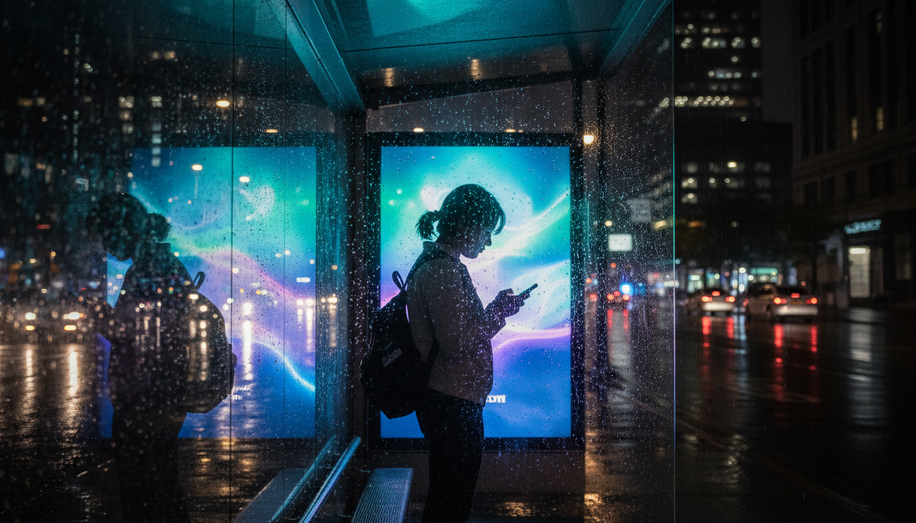

In the bustling arteries of urban life, where commuters surrender to the rhythm of public transit, dwell time emerges as the unsung hero of out-of-home advertising. Unlike fleeting billboards that vanish in seconds, transit ads on buses, subways, and trains command attention for minutes—or even hours—transforming passive riders into immersed audiences. This captive exposure isn’t just a perk; it’s a strategic goldmine for brands willing to craft messages that resonate deeply during those inevitable journeys.
Consider the subway car, a rolling theater of human stories. Riders, wedged shoulder-to-shoulder, have nowhere to hide from the visuals wrapping the interior panels or flickering on digital screens. Industry data underscores this potency: studies from firms like Nielsen highlight how extended dwell times boost ad recall by up to 40% compared to roadside signage. Here, the key lies in eschewing quick-hit slogans for narrative-driven content. A campaign for a lifestyle brand might unfold across multiple panels, telling a sequential story—a morning coffee ritual evolving into an evening unwind—that mirrors the commuter’s own day. This serialization exploits the ride’s duration, turning travel time into brand storytelling time.
Buses amplify this dynamic with their dual audience: insiders gazing out during traffic jams and outsiders glimpsing wraps as vehicles crawl through city streets. Full-bus exteriors, those massive vinyl canvases, generate impressions in the millions weekly, but interiors shine for dwell-time mastery. Long-haul routes, where passengers endure 30-minute-plus slogs, invite richer engagement. Take interactive elements: QR codes linking to augmented reality experiences, where scanning reveals a virtual product demo tailored to the rider’s location via geofencing. One recent New York campaign for a fitness app did just this, overlaying personalized workout challenges on bus windows, resulting in a 25% uptick in downloads during peak hours. The genius? It bridges the monotony of standstill traffic with immediate, rewarding action.
Trains, with their predictable routes and packed cars, offer repeated exposure—a commuter might encounter the same ad thrice daily. This frequency builds familiarity, but savvy advertisers layer in adaptability. Digital screens in rail cars, now ubiquitous, rotate content based on time, weather, or even real-time transit delays. A beverage brand could swap sunny-day refreshers for cozy hot drinks during a sudden downpour, announced via app integration. Such relevance transforms dwell time from tolerance to delight, fostering emotional connections. Experts at OUTFRONT Media note that these dynamic formats increase engagement by 30%, as riders, bored and phone-fatigued, latch onto fresh, context-aware narratives.
Yet, crafting for dwell time demands more than tech; it’s about psychology. Commuters aren’t just waiting—they’re in transition, minds open to distraction amid the sway and hum. Simple, bold visuals cut through the haze: high-contrast colors, emotive imagery, and concise copy that invites lingering. Long-form storytelling thrives here, unlike the 7-second billboard rule. A financial services ad might pose a provocative question—”What if your commute funded your dreams?”—followed by a step-by-step explainer on investment apps, complete with testimonials from fellow riders. This approach, tested in Chicago’s L trains, lifted inquiries by 18%, proving that dwell time allows for persuasion, not just awareness.
Beyond vehicles, transit hubs extend the canvas. Platforms and shelters, with their intermediate waits of 2-10 minutes, reward bold “domination” tactics—claiming every ad space in a station for immersive environments. Digital walls pulsing with synchronized videos create a surround-sound effect, drawing eyes during those fidgety pauses. Interactive kiosks take it further: touchscreens offering polls or games that dispense coupons, turning wait time into playtime. A London Underground pilot for a retail chain gamified product discovery, yielding a 15% conversion rate as riders scanned rewards en route to shops.
Of course, success hinges on integration. Transit ads shine brightest when synced with digital extensions—retargeting those QR scanners via mobile ads or geofenced push notifications. This omnichannel loop maximizes ROI, with transit’s low CPM (often under $3) delivering outsized returns. Agencies like Broadsign report campaigns blending bus wraps with app tie-ins achieving 2-3x lifts in brand lift metrics.
In an era of ad fatigue, transit advertising’s dwell-time advantage redefines engagement. By leaning into the captive nature of commutes—buses grinding through neighborhoods, subways hurtling underground, trains linking suburbs to cores—brands can forge lasting impressions. It’s not about shouting louder; it’s about whispering wisely during those stolen moments of undivided attention, turning every ride into a revelation. For marketers eyeing the next big push, the message is clear: in transit, time is on your side—use it to captivate, convert, and conquer.
Harnessing this potent dwell-time advantage requires sophisticated tools that extend beyond traditional ad placement. Platforms like Blindspot empower marketers with unparalleled audience measurement and real-time performance tracking, ensuring every sequential story, dynamic message, or interactive experience optimizes engagement during those captive moments. With robust ROI measurement and programmatic DOOH capabilities, brands can confidently craft and attribute the direct impact of their immersive transit campaigns, truly mastering the art of the dwell-time strategy. Learn more at https://seeblindspot.com/