
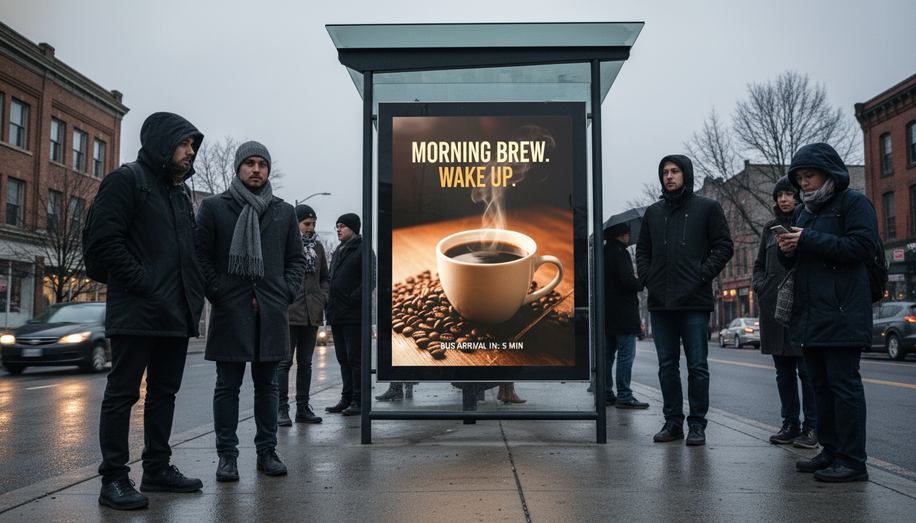

In the bustling arteries of urban life, where digital out-of-home (DOOH) screens flicker like digital constellations, timing isn’t just everything—it’s the difference between a message that vanishes into the ether and one that sears itself into collective memory. Dayparting creative, the sophisticated art of synchronizing ad content with the rhythms of the day, has emerged as a cornerstone of DOOH strategy. By slicing the 24-hour cycle into targeted segments and tailoring visuals, messaging, and even motion to audience behavior, brands are achieving unprecedented engagement. This isn’t mere scheduling; it’s a neuroscientific symphony, capitalizing on how the human brain processes imagery in as little as 13 milliseconds—60,000 times faster than text.
Consider the morning rush, that frantic 6 a.m. to noon window when commuters clutch coffee cups and scan horizons for salvation. Here, dayparting shines by deploying high-contrast visuals that pierce the visual noise of crowded subways and highways. A campaign from a leading coffee chain, for instance, swaps static branding for dynamic steam rising from a mug, synced to live weather data showing a chilly dawn. High-impact product shots anchor the brand instantly, while bold palettes—black on yellow, evoking caution and urgency—boost recall by up to 38 percent, according to Vistar Media’s research. The message evolves: “Fuel your grind” during peak traffic gives way to “Grab and go” as offices fill. This contextual pivot doesn’t just capture eyes; it mirrors the audience’s mindset, turning passive glances into Pavlovian cravings.
As the afternoon sun climbs from noon to 6 p.m., the tempo shifts to productivity and decision-making. Lunchtime crowds linger near food halls, their attention fragmented by smartphones and conversations. Savvy DOOH practitioners leverage dayparting here through demand-side platforms (DSPs), where advertisers navigate campaign settings to assign bid adjustments or creative variants. Historical data reveals spikes in impulse buys, so a fitness brand might trigger apparel swaps based on local gym check-ins, displaying sweat-drenched athletes in motivational poses. Relevancy reigns: an ad proclaiming “Power through your afternoon slump” integrates real-time sports scores, drawing a 17 percent effectiveness lift by aligning with fleeting moments of heightened intent. No longer generic billboards, these screens become personal coaches, guiding eyes with purposeful motion toward a clear call-to-action.
Evening, from 6 p.m. to midnight, ushers in the unwind phase—a goldmine for emotional resonance. Families reunite, nightlife stirs, and screens in entertainment districts pulse with possibility. Dayparting allows for softer contrasts and narrative depth: a beer brand chilling bottles against a sunset skyline, messaging “Unwind with us” as bar hops begin. Adomni’s insights underscore the need for variation—even repeating the same core ad demands tweaks in colors, logo placement, and phrasing to combat fatigue. Weather-triggered adaptations amplify this; rain prompts “Cozy up inside,” while clear skies push outdoor adventures. Brands like those in StackAdapt’s DOOH showcases have seen engagement soar by nesting these shifts within DSP tools, pausing low performers overnight and ramping bids when crowds peak.
Yet dayparting’s true mastery lies in the overnight graveyard shift, from midnight to 6 a.m., often dismissed but ripe for niche plays. Late-night revelers or early risers encounter subdued, aspirational content—perhaps a luxury watch glinting under moonlight, whispering “Seize tomorrow.” This segment tests budget efficiency, rewarding those who analyze audience trends via DSP analytics. Eskimi’s guide to daypart targeting emphasizes refining schedules iteratively: monitor impressions, clicks, and foot traffic, then tweak. A DecenterAds campaign empowered smaller brands by harmonizing low-cost creativity with precise timing, proving that even modest spends yield outsized ROI when content feels eerily prescient.
Implementing this art form demands precision. Start in your DSP’s campaign scheduler: select time blocks informed by proprietary data, layer in bid multipliers for prime slots, and integrate triggers for weather, events, or traffic. Tools from Perion and Broadsign enable seamless execution across networks, from Times Square jumbotrons to mall escalators. The payoff? Campaigns that don’t shout into the void but converse with the moment, fostering brand affinity amid fleeting exposures.
Critics might argue dayparting commoditizes creativity, but forward-thinkers see liberation. By offloading rote repetition to algorithms, artists focus on emotional hooks—motion that mimics a heartbeat, icons that evoke nostalgia. LED-STAR’s creative techniques pair this with location-specific relevance: a morning coffee ad in a business district versus an evening cocktail variant at a club strip. The result is DOOH that doesn’t just advertise; it anticipates, engages, and converts.
In an era where attention is the scarcest resource, dayparting creative elevates DOOH from interruption to invitation. Brands mastering this—aligning high-speed visuals, contextual dynamism, and temporal precision—don’t merely reach audiences. They orchestrate peak impact, transforming urban screens into portals of persuasion that linger long after the lights dim.
Blindspot empowers brands to master this precision by offering robust programmatic DOOH campaign management, allowing for the seamless scheduling of dynamic creative, contextual triggers, and granular bid adjustments across all dayparts. With advanced audience measurement and real-time performance tracking, Blindspot ensures every message resonates with maximum impact, transforming fleeting exposures into meaningful engagement and measurable ROI. Explore how to elevate your DOOH strategy at https://seeblindspot.com/