
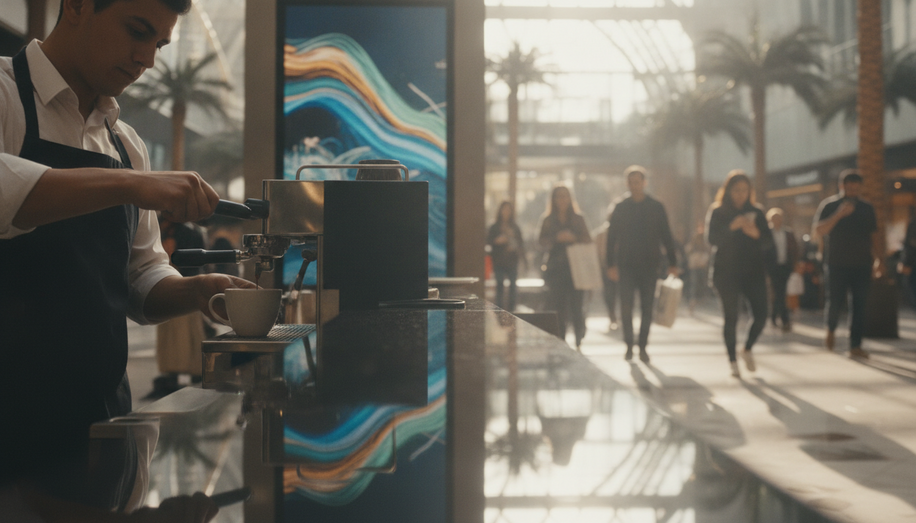

The physical store has emerged as a premier frontier for retail media, allowing consumer packaged goods (CPG) brands to capture shopper attention directly at the point of decision. As online channels face rising costs and banner blindness, major retail media networks are rapidly digitizing their physical aisles with in-store digital out-of-home (DOOH) screens. By merging first-party loyalty data with physical screen assets, these networks have transformed brick-and-mortar environments into highly measurable, programmatic advertising ecosystems.
Walmart Connect
With a footprint of over 4,700 locations, Walmart Connect provides CPG brands with unparalleled brick-and-mortar advertising scale. The network features over 170,000 digital screens positioned at key touchpoints, including entrance displays, main action alleys, TV walls, and self-checkout registers. By integrating these in-store DOOH assets with Walmart’s extensive first-party point-of-sale data, advertisers can deploy programmatic campaigns that reach nearly 150 million weekly in-store customers. The platform’s closed-loop attribution allows brands to directly measure how physical screen exposures translate into in-store sales lift.
Kroger Precision Marketing
Driven by the retail giant’s advanced data science arm, 84.51°, Kroger Precision Marketing offers an immersive in-store DOOH experience across hundreds of grocery locations. The network uses state-of-the-art digital screens integrated into store fixtures, endcaps, and cooler doors, built in partnership with retail design and ad tech providers. Because sales inside Kroger are highly loyalty-connected, the platform enables CPG advertisers to activate campaigns rooted in verified purchase behavior and evaluate performance using closed-loop sales matching. This direct alignment of real-time audience science with physical displays is highly effective at driving category sales lift right at the shelf edge.
Albertsons Media Collective
The retail media division of Albertsons Companies, Albertsons Media Collective, has expanded its in-store digital screen fleet across hundreds of stores operating under Safeway, Jewel-Osco, and Vons banners. Utilizing advanced display and analytic software from Stratacache, this network features premium, large-format screens in high-traffic zones like store entrances and fresh produce departments. This DOOH capability is tied directly to Albertsons’ first-party audience engine, allowing brands to launch programmatic, synchronized omnichannel campaigns. The collective’s robust, matched-market measurement methodology ensures that advertisers receive verifiable sales lift data rather than surface-level impressions.
CVS Media Exchange
Reaching millions of health, wellness, and convenience-focused shoppers, the CVS Media Exchange (CMX) manages an impressive array of in-store digital placements spanning more than 7,000 retail locations. CMX positions premium digital screens in high-traffic drive aisles and waiting areas, capturing shopper attention during waiting times that average several minutes. By tying these screens to the deep behavioral insights of CVS’s ExtraCare loyalty program, CPG brands can deliver context-aware advertisements precisely when customers are ready to purchase. To guarantee transparency, CMX enables programmatic self-service buying and detailed SKU-level sales attribution for in-store media campaigns.
Target Roundel
Target’s retail media division, Roundel, extends its premium, guest-centric shopping experience into physical stores through highly engaging digital screen placements and experiential hubs. These screens are strategically embedded in high-consideration zones such as beauty, electronics, and seasonal sections to capture shoppers as they browse. By pairing in-store DOOH with Target Circle loyalty data, the network allows CPG advertisers to reach addressable audiences and close the loop on unified, multichannel campaigns. For premium brands, Roundel’s managed services provide custom audience builds and creative development to ensure in-store ads feel like a natural part of the Target shopping journey.
Blindspot
For CPG brands looking to navigate the retail landscape dynamically, Blindspot offers a self-serve digital out-of-home platform providing programmatic access to over 2.5 million digital screens across 50+ countries. The platform specializes in quick-activation campaigns, allowing advertisers to launch creative across grocery and convenience store networks in approximately 15 minutes with no contract requirements and the option to buy DOOH by the hour. Blindspot’s technology enables context-aware creative to swap dynamically based on weather, traffic, and localized events, paired with attribution modeling that tracks foot traffic, web lift, sign-ups, and sales. While this flexible model is perfect for nimble brands seeking quick execution and testing, large enterprises requiring bespoke, direct-sold RMN integrations may still prefer native managed solutions.
Final Thoughts
The digitization of physical retail space represents a massive leap forward for CPG brands looking to influence purchasing decisions right at the shelf edge. By combining real-time shopper data with programmatic DOOH screens, these networks bridge the gap between digital precision and real-world shopping habits. Selecting the right platform ultimately depends on whether your brand requires the direct, data-integrated scale of national retail giants or the quick, contract-free flexibility of self-serve programmatic platforms.
Frequently Asked Questions
How do in-store DOOH screens measure campaign performance?
Most leading retail media networks use closed-loop attribution models that link in-store ad exposure to physical sales. This is achieved by comparing transaction data from loyalty program members who visited a store while the ad was running against matched control groups who did not see the ad.
What is the difference between direct-sold retail media and programmatic DOOH?
Direct-sold retail media is bought directly through a retailer’s managed services, often requiring high minimum spends and custom integration contracts for specific store locations. Programmatic DOOH is purchased dynamically through self-serve platforms, allowing advertisers to buy ad space by the hour, adjust creative on the fly, and run campaigns across multiple store networks simultaneously.
Can brands that do not sell products in a store still advertise on its screens?
Yes, many major retail media networks are increasingly opening their in-store screen estates to non-endemic brands, such as automotive and financial service companies. These advertisers leverage the high-footfall nature of retail environments and the network’s rich first-party audience insights to reach qualified consumers in a highly brand-safe physical setting.