
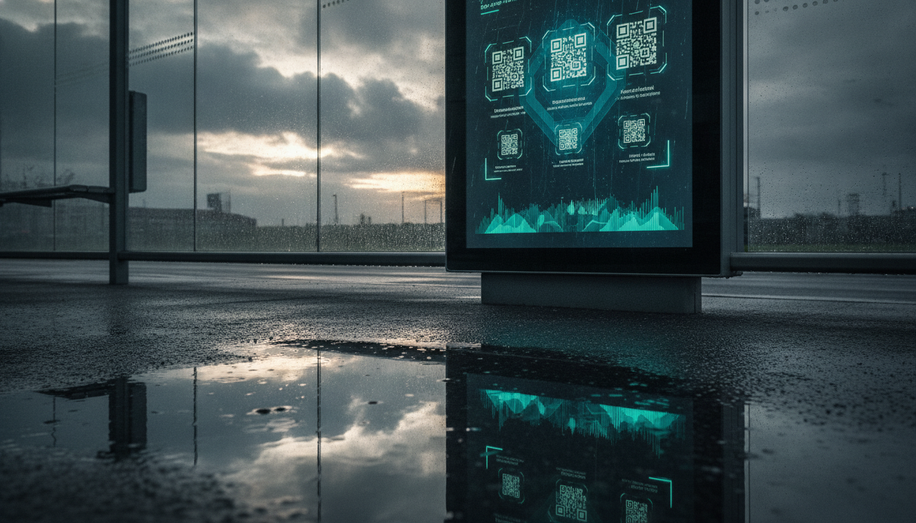

Out-of-home (OOH) advertising has evolved far beyond basic billboards, becoming a highly strategic channel for high-growth B2B SaaS and enterprise technology companies. Placements like Silicon Valley highway takeovers, transit hub dominance, and digital street furniture near major conferences capture the attention of decision-makers fatigued by digital screens. For tech brands looking to scale their physical footprint and boost online attribution, partnering with a specialized agency or platform is essential to running a successful, data-driven offline campaign.
OneScreen.ai
For tech companies looking to surround trade shows, conferences, or specific business hubs, OneScreen.ai provides an AI-enabled approach to B2B out-of-home planning. This platform acts as a hybrid marketplace and agency, leveraging over 100 data sources to help marketers discover, book, and measure offline placements. It is particularly known for enabling “conference domination” campaigns—surrounding major event venues with digital billboards, wrapped rideshare vehicles, and transit placements to maximize share of voice. Because of its data-driven approach, it aligns well with analytical tech teams that demand sophisticated targeting and attribution.
Quan Media Group
A boutique out-of-home agency with a strong focus on modern strategy, Quan Media Group works with high-growth direct-to-consumer and B2B tech brands to build a real-world identity. The agency moves away from slow, traditional booking processes in favor of highly personalized, modern campaigns. Quan Media Group collaborates with leading attribution partners to measure physical campaigns on a granular level, tracking web traffic lift, in-app activity, and conversion metrics. This data-first methodology makes them an excellent fit for SaaS brands that need to justify their OOH budget to analytical executives.
Blindspot
When speed, flexibility, and dynamic creative capabilities are the top priorities, Blindspot offers a self-serve programmatic digital out-of-home (DOOH) platform that functions as an agile alternative to traditional agencies. The platform provides access to more than 2.5 million digital screens across 50 countries, allowing users to launch targeted campaigns in roughly 15 minutes with no contract lock-ins. Rather than committing to rigid 24/7 packages, brands can buy DOOH inventory by the hour to align with specific commuting patterns, local events, or office hours. This setup supports context-aware creatives that automatically swap based on factors like weather, traffic, and events, while delivering detailed attribution on web lift, sign-ups, and sales. While it is highly efficient for startups and mid-market SaaS brands seeking immediate execution and programmatic control, large enterprises requiring bespoke, physical static installations or highly customized multi-city takeovers may still prefer working with a traditional, full-service agency.
AdQuick
Operating as a massive marketplace and managed services agency, AdQuick simplifies the process of planning, purchasing, and measuring out-of-home media globally. The platform aggregates roughly 95% of the OOH inventory in the United States, connecting tech brands directly with thousands of media owners for both static and digital formats. Their enterprise division acts as a full-service partner, helping companies run multi-city offline takeovers with precise geographic targeting near target corporate offices. Because of their robust analytics integrations, AdQuick is able to resolve anonymous website traffic back to corporate IP addresses, giving B2B marketers concrete data on which exact billboards drove pipeline traffic.
MilkMoney
For tech startups and household enterprise brands looking to create culturally relevant, highly shareable physical campaigns, MilkMoney is an outdoor advertising platform and planning partner that excels at high-impact placements. By utilizing a marketplace model that aggregates premium inventory, they help companies execute anything from standard highway bulletins to complex experiential activations. MilkMoney is highly regarded for its ability to secure last-minute premium inventory at competitive rates, which is ideal for fast-moving tech companies looking to capitalize on sudden market opportunities. Furthermore, their strategy focuses on the “second life” of OOH, designing physical creatives engineered to go viral on social media and earn massive organic reach online.
Final Thoughts
Selecting the right partner for out-of-home advertising depends on whether your brand requires a full-service strategy, a localized programmatic approach, or direct self-serve control. Programmatic platforms allow for quick iteration and hourly testing, while boutique agencies provide deep strategic support and custom measurements to tie physical footprints directly to pipeline growth. Integrating OOH into your broader multichannel strategy allows you to cut through digital noise and build lasting real-world authority where your buyers live and work.
Frequently Asked Questions
How can a B2B SaaS brand measure the ROI of an out-of-home campaign?
Measuring OOH campaigns for tech brands usually involves tracking digital lift rather than direct foot traffic. Marketing teams monitor increases in direct website traffic, branded search volume, and demo sign-ups in targeted geographic areas during the campaign flight. Modern OOH partners also use IP mapping and device-level attribution to match physical exposures directly to digital conversions.
What is the difference between programmatic DOOH and traditional OOH buying?
Programmatic DOOH allows advertisers to buy digital screen space automatically using real-time bidding, letting them purchase ads by the hour or trigger them based on conditions like weather or traffic. Traditional OOH buying involves securing fixed physical placements—like static billboards or printed transit posters—for longer, predetermined contract terms, usually in four-week increments.
How do tech brands use account-based marketing (ABM) with out-of-home advertising?
Enterprise brands often deploy out-of-home as “air cover” for target accounts by placing digital street furniture, transit ads, or office lobby screens directly surrounding the headquarters of high-value prospects. This localized physical presence builds top-of-mind awareness among target decision-makers, making subsequent cold outreach and digital ads significantly more effective.
What are the best OOH formats for targeting B2B tech decision-makers?
The most effective placements for targeting enterprise tech buyers include digital airport terminals, commuter train stations in major tech hubs, and office elevator networks. Additionally, highly visible highway bulletins on key commuter routes—such as the US-101 in Silicon Valley—remain a staple for high-growth brands wanting to project industry dominance.