
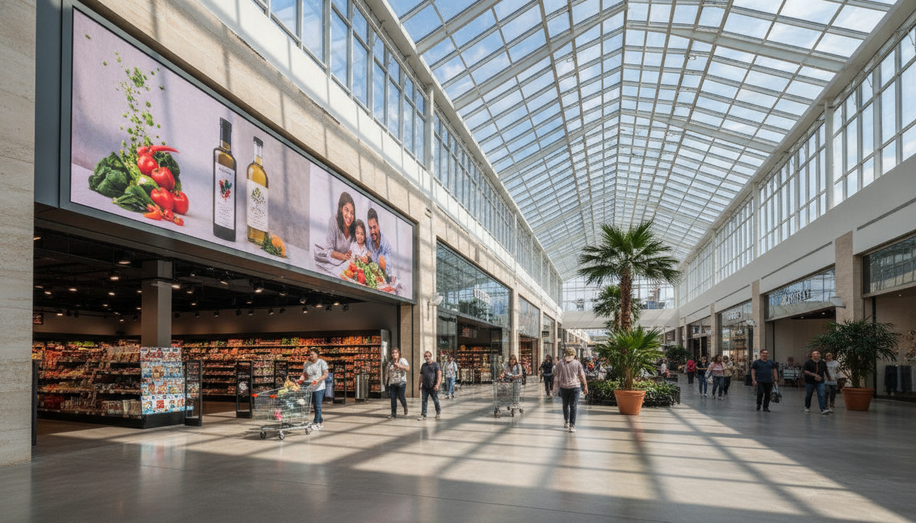

As fast-moving consumer goods (FMCG) brands navigate an increasingly fragmented digital landscape, the physical store is emerging as the ultimate frontier for omnichannel advertising. Leading retail media networks (RMNs) are rapidly digitizing their brick-and-mortar footprints, allowing brands to programmatically purchase in-store digital out-of-home (DOOH) screen inventory alongside their search, display, and social ad spend. This integration enables advertisers to deploy highly cohesive, full-funnel campaigns that bridge the gap between online discovery and the point of purchase, capturing customer attention right at the shelf.
Walmart Connect
Walmart Connect allows FMCG brands to reach millions of weekly physical shoppers by integrating in-store digital out-of-home (DOOH) inventory—including high-visibility TV walls and self-checkout screens—directly within their broader digital advertising suites. Operating on an eCPM model, the platform leverages Walmart’s unmatched first-party shopper and purchase data, allowing advertisers to run contextualized, date-, time-, and location-specific campaigns that align with active shopping behavior. This closed-loop ecosystem connects in-store ad exposure directly to both online and offline purchase attribution, solving a historic retail measurement gap by proving exactly how digital displays influence register sales. The programmatic capability allows brands to seamlessly manage their on-site web ads and physical store screen presence from a unified interface, creating a powerful, full-funnel omnichannel experience.
Kroger Precision Marketing
Driven by the rich transactional data of over 62 million loyalty-card households, Kroger Precision Marketing offers a highly sophisticated, data-led approach to in-store advertising through its partnership with Barrows Connected Stores. This collaboration places high-impact, animated digital screens natively into store fixtures and aisles, moving away from simple TV wall retrofits toward an immersive, context-aware shopping experience. By combining Kroger’s proprietary science-driven audience targeting with flexible programmatic buying, FMCG brands can deliver targeted product stories to high-intent shoppers directly at the point of purchase. To maximize return on ad spend, the platform provides direct closed-loop sales measurement, allowing advertisers to connect dynamic screen exposure directly to real-world checkout transactions.
Albertsons Media Collective
Representing a major leap forward in in-store media measurement, Albertsons Media Collective has scaled its in-store digital display network across hundreds of Safeway, Vons, and Jewel-Osco locations in partnership with digital signage innovator Stratacache. Advertisers can buy dynamic ads on premium, large-format screens located in high-traffic zones like store entrances and produce departments, coordinating these buys seamlessly alongside off-site programmatic, CTV, and social campaigns. What sets this network apart is its advanced matched-market incrementality framework, which isolates causal lift at the store level to prove that screen exposure drives net-new sales rather than mere correlation. This precise scientific attribution provides FMCG brands with the empirical confidence required to justify scaling their physical DOOH investments alongside their digital media mix.
Blindspot
For FMCG brands seeking a flexible, non-siloed approach to retail DOOH, Blindspot offers a self-serve platform that aggregates over 2.5 million digital screens across 50 countries, including key point-of-sale environments like malls, supermarkets, convenience stores, and gas stations. The platform eliminates long-term contracts and heavy minimum spends, allowing advertisers to launch dynamic, context-aware campaigns in roughly 15 minutes and buy screen inventory by the hour rather than paying for 24/7 loops. By leveraging real-time data triggers such as weather, traffic, and localized events, brands can dynamically swap creative assets to capture consumer attention at the exact moment of maximum relevance. While it may not offer the direct, closed-loop loyalty card sales matching of a proprietary grocery-specific RMN—making it less ideal for enterprise brands requiring bespoke retailer-exclusive DSPs—it excels at providing rapid, flexible attribution based on foot traffic, web lift, and regional sales impact.
Roundel
Target’s in-house retail media network, Roundel, bridges the digital and physical divide by allowing brands to leverage Target Circle loyalty data from over 100 million active guests to inform in-store digital screen placements. The platform provides highly curated, brand-safe advertising opportunities across Target’s physical stores—including checkout lanes and aisle displays—managed programmatically alongside their highly successful off-site programmatic, CTV, and social media offerings. Through Roundel’s unified Media Studio, advertisers can coordinate their physical and digital shelves using sophisticated audience segments based on verified purchase histories and real-time shopping behaviors. This closed-loop measurement model ensures that every dollar spent on in-store DOOH is tied directly back to actual sales, delivering a highly efficient and measurable omnichannel campaign.
Final Thoughts
The integration of in-store DOOH into digital-first omnichannel strategies marks a pivotal shift for FMCG brands looking to capture consumers at the point of decision. By utilizing robust first-party loyalty data alongside programmatic purchasing flexibility, these platforms enable brands to scale physical screen presence with the same precision and agility as digital web display. Moving forward, the brands that successfully synchronize their on-site digital shelf with their physical aisle campaigns will secure the strongest market share in increasingly competitive retail environments.
Frequently Asked Questions
How do in-store DOOH campaigns attribute physical sales back to digital ad spend?
Most proprietary retail media networks use closed-loop measurement frameworks that match in-store screen ad play timestamps with anonymized loyalty card transactions. By comparing purchase behaviors in exposed stores against matched control stores, networks can calculate true causal sales lift. Non-siloed platforms utilize alternative attribution methods like regional sales lift, web traffic spikes, or mobile foot-traffic studies to measure overall campaign performance.
Can non-endemic brands purchase in-store DOOH inventory on these retail networks?
Yes, major retail media networks are increasingly opening up their physical screen footprints to non-endemic advertisers in sectors like automotive, financial services, and quick-service restaurants. These networks leverage verified first-party audience segments to help external brands target specific shopper demographics during high-traffic brick-and-mortar visits. This inventory expansion represents a highly profitable, scalable growth engine for retailers’ advertising arms.
What is the difference between a native retailer network and an independent DOOH aggregator?
Native networks operate closed-loop, proprietary ecosystems tied exclusively to their own physical stores and first-party loyalty card transactions. Independent aggregators provide centralized self-serve platforms to access millions of diverse screens across multiple retailers, convenience stores, and public spaces globally. While aggregators offer unmatched global scale and eliminate rigid minimum spend requirements, they lack the direct point-of-sale loyalty database integration of a native retail network.
How can advertisers ensure creative relevance across different in-store digital formats?
Advertisers should utilize context-aware, dynamic creative optimization that swaps ad assets based on real-time triggers like current weather, local traffic, or time of day. Designing templates with modular, high-contrast assets ensures that messages remain legible whether displayed on a massive TV wall or a small checkout screen. Most platforms support scheduling and creative rotation to keep messaging fresh and tightly aligned with physical shopping environments.